Push Payments

As I wrote in a previous note Banks will win in Payment: But which ones?  Banks are very well positioned to execute. They have the consumer relationship, the merchant relationship, the IT infrastructure, and have always taken a key role in “commerce”.  However, Banks have tended to operate in a slow “evolutionary” model.. and are now in a very dangerous position. Their network is complex and brittle, their value proposition and brands diminished, and the value equation has shifted.

If you are a bank and looking to “optimize” your approach to mobile payments, what are your key assets and constraints?

  •           Control of Network (vs. Visa, Telecos, Google, Apple, )Payment Value
  •           Leverage existing assets
  •           Massive proliferation of consumer information and account numbers
  •           Risk Management
  •           Consumer Relationship
  •           Margin/Fees
  •           Value to consumer
  •           Value to retailer
  •           Regulatory issues

As a bank, would you invest in NFC? A standard owned by the card groups, and telecos and despised by retailers? Of course not.. it does nothing to help banks, merchants or consumers…

The centerpiece of any Retail Bank strategy should be to protect the consumer relationship. If you “blew up” payments today and started from scratch, how would you redesign it? I agree with Ross Anderson (See KC Fed) Ross Anderson “If you solve the authentication problem.. everything else is just accounting  ..” . Why should I pass my credentials to a merchant, processor, acquirer, network, .. all just to give them to my (issuing/originating) bank? Why on earth would I pass around real account numbers (ex Checks)? Why do all these entities get to see me? What if I could interact with the originating bank directly to instruct them to send the payment?

We have seen “credit push” attempted globally with Sofort, SMS Pay, NACHA Credit Push, SEPA Credit Transfers, UK Direct Credits, US Trials with Padiant,…etc. All have a “mixed” record of success, with the biggest issue being consumer adoption and margin/bank incentives. Given US Bank recognition of the innovation problem with 4 party networks, and the need to consolidate debit processing, it would seem there is some movement in furthering this model in the US.

Unfortunately, the trials with Padiant have been a flop. A specialized payment terminal creates unique QR code which is captured by a payors phone camera. Phone sends to code to acquiring bank. Processor looks up consumers bank in directory and sends to originating bank for consumer auth/approval. Funds are then PUSHED directly to merchant and terminal gets auth. Top issue is consumer phone data connectivity, and a rather complex user process. Of course this is a starting point, and can be improved.. retailers just needs to get the buyer a few critical pieces of info:

  • TID (terminal ID)
  • MID (Merchant ID)
  • Transaction ID
  • Bank
  • Amount

I like this “Push model” MUCH.. After all I can push the payment from either a debit or credit account. The merchant need not know, and consumers remain anonymous throughout the transaction. Push takes almost all fraud out of the system and keeps authentication with the entity that KYC’d the consumer (the originating Bank). It gives the Banks tremendous flexibility in constructing new focused solutions at POS, eCom and mCom. Heck, its also aligned with Apple’s QR code wallet. The perspective will feed my update on Part 2 of Directory Battle.

For investors, impact is as follows

  • Loss of debit volume
  • Further chaos in mobile payments
  • Need for better auth on phone (Iris, bio, …)
  • POS/ECR expansion to deliver info to User phone (QR Code, BT, WiFi, …)

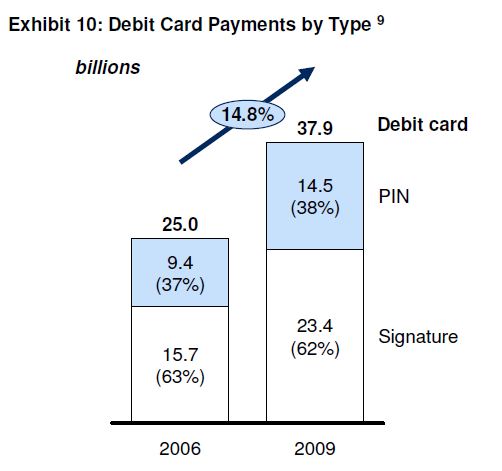
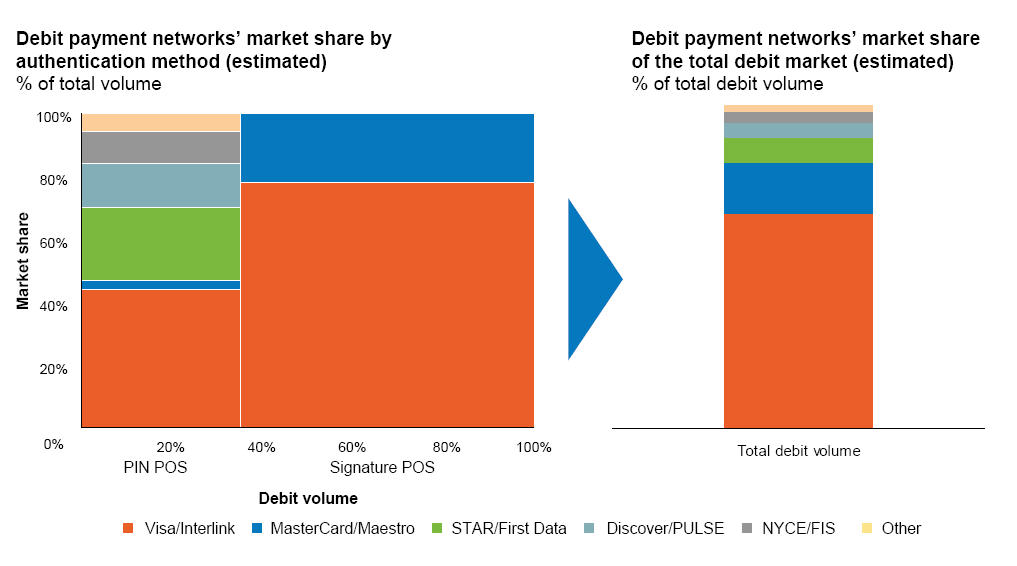
As a side note, I recommend the reading of Visa’s Debit Defense Strategy
PIN Volume

www.digitaltransactions.net/public/frontend/files/0207net.doc
Google Wallet Goes Plastic

2 Nov 2012

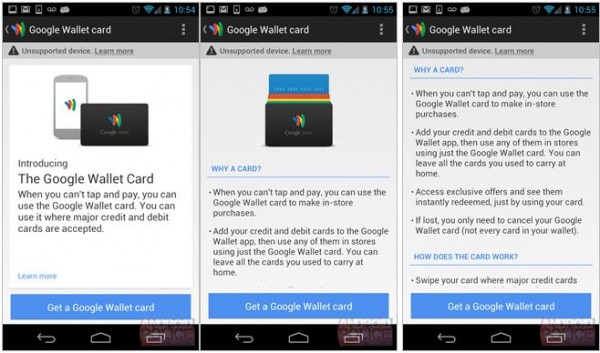
Android Police published a story on Google’s forthcoming plastic pilot yesterday.

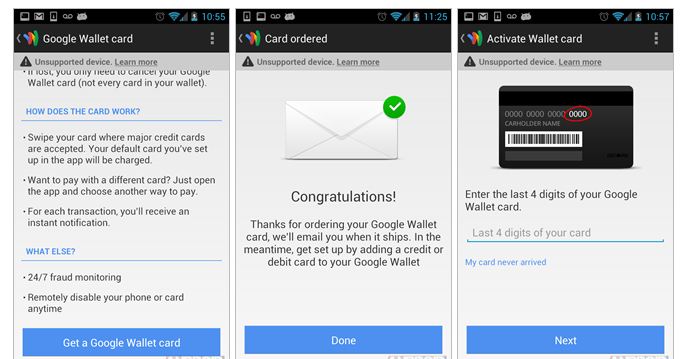
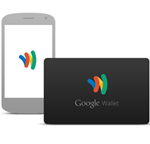
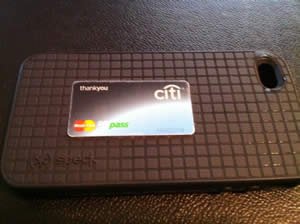
What do we know? Very little beyond the photo above.. If the story does pan out, it could be a tremendous win for retailers, consumers and even banks. The only loosers? NFC and carrier led payment initiatives.

Solution overview:

  • Everything that Wallet 2.0 does today on NFC, only now you can do it with a swipe of plastic
  • In today’s NFC wallet, consumers scroll through their list of cards to choose the plastic they want. The picture from android police outlines how this will be the same for physical plastic “want to pay with a different card? Just open the app and choose another way to pay..  just as you can today only now there is no NFC dependency.
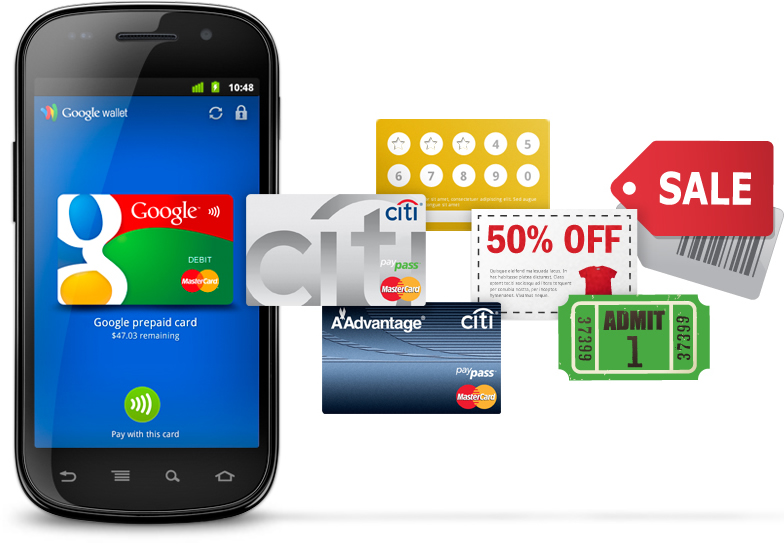
  • New for consumers? well a cool looking black card.. all of your tickets, incentives, coupons in one place (in the cloud). Don’t worry about loosing your offer e-mails..  Google also has POS integration working at 10+ grocers so your coupons automatically come off on the paper reciept.. and in the cloud. No one else has payment and incentives put together like this.
  • New for retailers? Integrated advertising.. look at performance of local search, adwords, offers, coupons across google properties.

Business Strategy Changes

  • Expand beyond NFC phones to any Android handset (and IOS according to article)
  • Allow offers to be redeemed on plastic
  • Allow Google to compete for payments business with retailers and consortiums (ie MCX)
  • One wallet for eCommerce, mCommerce, and a plastic card for POS. This is exactly what PayPal is doing with its own physical plastic, and American Express plans to do in SERVE 2.0.
  • Expand Google wallet into IOS? That will certainly crimp Apple’s plans here. Google will establish itself as both a payment network AND and Ad network
  • No more TSMs. Google will see the transaction data for every card used in the wallet. Just as Amazon, Apple, PayPal see every transaction for eCommerce.

My guess is that Google will proceed with a small scale pilot, just as it did with Wallet 1.0.

Why do retailers win? (see related blog)

Google will be in a position to drive the lowest cost payment (perhaps better than 0bps MDR) AND allow retailers to drive marketing to their consumers online and via mobile.

Why do consumers win?

With Google, use any card you want, use any phone you want … consumers get to CHOOSE.  (In ISIS the only card you can load today is a Visa credit card)

More to come this weekend.

Google sorry that some idiot spoiled your release plans.. but this is super stuff… I always wanted a black card.

My biggest questions?

  • Will Google integrate a direct ACH connection.
  • Who is the network?

Don’t Wrap Me

26 Oct 2012

Today when you use iTunes, PayPal, Amazon or Google wallet do you think about which card in the back end your purchase will go on? Most of us take the view that “it just works”, and perhaps ensure that the default card is the one which allows you to accumulate the most points (Amex for me). When eCommerce started, there were few entities capable of managing card not present (CNP) risk hence specialists evolved (PayPal, Cybersource, GSI, …) that could manage this risk on behalf of the merchant/community. Payment cards/accounts had to be wrapped by these risk specialists in order for payments to be processed. As mCommerce evolved (think Apple iTunes), digital goods purchases where integrated into the “platforms” to allow seemless purchasing of content… thus starting the process by which cards were associated with “cloud” accounts accessed in mobile phones. Today, mCommerce sales are around $170B in the US, and mCommerce sales are around $10B (Digital Goods ~$4B and physical the rest .. which includes buying from Amazon on your iPad at home). Quite frankly card companies didn’t mind letting other entities like Amazon and Apple store your card information so that you could buy in either the eCommerce or mCommerce markets…. This is all changing for physical commerce because the PRIZE IS BIGGER.

With the Physical POS sales $2.4T (USA not including T&E, Auto, Oil/Gas)… The established networks and banks are saying “don’t wrap me”:

  • Amex’s new Serve product 2.0 is wrapping other bank debit and credit cards
  • PayPal’s new plastic is wrapping what they have already, Amex is threatening to cut both PayPal and Google down
  • Visa has reportedly issued a cease and desist to Google at the behest of Chase (See NFC Times)

All of these wallets (Virtual, NFC, Cloud, …) are causing issuers to wonder “who is top of wallet”?.. and how does a customer select my plastic. They seem much more concerned about one physical plastic card wrapping them (ie Serve and Paypal) than a virtual wallet, but they are also very concerned about data and letting any ONE intermediary see transaction data (and add offers/services on top of them). In other words “DON’T WRAP ME” (see blog Paypal at POS). Of course there is not much to worry about yet. Paypal is reportedly doing less than 5 transactions per WEEK per Store at HomeDepot..  But the established players want to stop anything before it starts.

How do cloud wallets manifest themselves? Well it could be NFC/Paypass, physical plastic, a QR code, or a voice print (Square).. all you need is a form of authentication (see Battle of the Cloud). Add to this the complexity of retailer data, issuer pricing, loyalty and incentives and the market is just nuts. Who is doing what to whom…? its like a 70s drug and sex movie.

Forces against NFC

27 Sept 2012

Although I’m not known for short blog posts.. I thought I would try one. Like grabbing a cereal bar for breakfast instead of my normal 3 pancakes, eggs, bacon, OJ, coffee… it will of course leave me with a large empty place… but sometimes it’s good to be hungry.

I read Scott Loftness’ tweet on no need for dedicated POS terminals if phones take off. Also was thinking of Square’s strategy of enabling all consumers to have an account (think cloud wallet), and my blog earlier this week on EMV/Verifone’s imaginary vision of the future (contactless EMV).  As a side note Verifone is telling investors the retails will by a massive display payment terminal to market to their customers.. FUBAR! Take a look at how IBM values the POS business.

Forces against NFC

  1. Cloud Wallets. Much is made of NFCs ability to interact independent of network.. This is great.. but remember the POS system and payment terminal are always connected. How many of you remember the days where someone pulled the blue paper over the embossed card number? All that is needed is a key… voice print, loyalty card, qr code, …  There is no need for specialized hardware today.
  2. Credit card only. Issuers, Mobile Operators and Payment Networks worked to position NFC as a “premium service”. How many of you have seen contactless debit cards? Merchants are aware.. and top 20 retailers (with few exceptions) have walked away.
  3. POS systems. Why on earth would any small merchant want to buy a dedicated POS system with a cash drawer? I think we will see tablets really start to take over this space. Although I’m not a big fan of in aisle checkout… there are variants that could work. Even more so if you eliminated cash as a payment option.
  4. If tablets become POS systems…. Then Verifone is a short.. or a long short. In the next 3 years they will see a big bump in re-terminalization due to EMV. Here is a picture of a mobile chip and PIN reader my friends at Baclays put together. All of their UK consumers have one.
  5. Mobile phones.. there will be instances where consumers can pay for their purchases before they collect them, or for small merchants and small businesses where payment is to a sole proprietor  (remember there are 474,000 US restaurants with under 500 employees). IMHO THIS IS WHERE PAYPAL SHOULD FOCUS.
  6. UBIQUITY. No merchant is going to invest where only 2-3% of customers can use the product. There are not enough phones in the market, and not enough payment terminals (<200k in US) that support them
  7. No compelling value. NFC must do something else beyond payment… there are no payment problems. Therefore NFC must start with something like unlocking doors or beaming pictures..
  8. Supply chain chaos and standards. NFC will take off in homogeneous markets (or those dominated by a monopoly)  that can force a standard (Edy/Suica in Japan, Octopus, EZ-Link, The French, … ). Today’s phones largely feature an embedded NFC SE made by NXP. The carriers want SWP based solution but Gemalto can’t get the SIMs out the door. It also doesn’t help that NXP’s current chips can take only one card emulation application (only paypass, or only paywave.. but not both).. which means that the little sticker on my phone does just about everything I need.
  9. NFC is anti cloud.. everything is locked up inside this little secure vault.. it ONLY does POS payments. I can’t do a mobile checkout with an NFC phone….

EMV Battle Impacts Mobile Payments

20 September

Most of everyone knows of the EMV efforts in the US, with Visa implementing a liability shift on October 1, 2015. In this model, any merchant that is presented with a chip and pin card, but is not capable of processing it (as an EMV), will bear fraud loss.  There have been very BIG swings in strategy over the last 6-8 months. The big issuers were all dead set against EMV.. saying they could not afford the cost to re-issue. Now all are on board… why? This is what I’m thinking about today….

Merchants have always loved PIN Debit (see blog). PIN was the cheapest transaction type prior to Durbin, and post Durbin PIN still has the unique advantage of allowing the merchant to route without going to Visa at all. Remember PIN Debit leniage was from ATM networks. Merchants also like the fact that 96% of PIN Debit fraud losses are assumed by issuers..

Visa/MA hate PIN Debit.. the countries where it has taken off like Canada-Interac, Australia EFTPOS, China Union Pay… have domestic clearing networks. This means that transactions are no longer routed through Visa/MA. In the US we have 8 debit networks (see blog). It makes little sense to continue all of these separate PIN debit networks if merchants can route directly to banks… The banks were thus looking at consolidation similar to what was done in countires above. In other words, banks were planning to take Debit back from Visa/MA in a bank owned network. After all, Bank margin improves in the PIN model (post Durbin) when payments are routed directly to them (they don’t pay a network fee ~10 bps).

Visa read the tea leaves… So how can Visa/MA stop the bank and merchant love affair w/ PIN? Force EMV…

The Merchant Stick? How will Visa “force” merchant’s to accept contactless? (See Visa Document)

Domestic and cross-border counterfeit liability shift. Merchants that cannot accept an EMV or contactless card when presented one by a customer will bear the liability of a fraudulent transaction instead of the issuer after October 1, 2015.

The Merchant “Carrot”?  Visa TIP program

TIP program allows merchants to be excused from validating their PCI DSS compliance for any year that at least 75 percent of their Visa transactions come from chip-enabled point-of-sale terminals. There are also subsidies for terminal upgrades … To qualify, terminals must be enabled to support both EMV contact and contactless chip acceptance, including mobile contactless payments based on NFC technology. Contact chip-only or contactless-only terminals will not qualify for the U.S. program

Visa’s effort to include contactless in the TIP program is very strategic. To gain the benefits of TIP, merchants must reterminalize with both contact and contactless EMV capability. Why? Well for one reason there are no contactless debit cards out there… yes everything is a credit card. These of course carry much higher fees… The other advantage of TIP is that the PCI-DSS wavier is like a “get out of jail free” card. Merchants can’t get the card without contactless… If this weren’t enough… not only does VISA want contactless.. they also want signature.

Visa says PIN not necessary – Green Sheet

“There’s a lot of confusion around the myth that EMV means ‘chip-and-PIN,'” Stephanie Ericksen, Visa Head of Authentication Product Integration, said in a blog published Jan. 13, 2012. “It doesn’t in many countries, including the U.S. That’s because, in the U.S., we can rely on online processing where transactions are transmitted in real time to the issuer for approval. With that in place, there’s no need for the offline authentication that was the genesis of chip-and-PIN.

From Chip and PIN to Chip and Choose? Visa wants  encourage signature as these transactions must be routed through them.. my position (and that of most non network people) is that AUTHORIZATION and AUTHENTICATION are completely different problem sets. The availability of real time approval means nothing if you don’t know WHO you are approving for WHICH CARD.  PIN answers the “who” question and the chip is the account number or “how” you are going to pay. I just can’t believe that Visa has come up with this story.. but they must in order to support “contactless”. Most consumers don’t know that today contactless transactions have limits. These limits are set by the issuer, in Europe they are typically around $25. However the issuer can choose to increase the limit (no PIN required), or require a PIN with a contactless payment.  All of this is a little absurd for Visa as PIN is always viewed as key to authentication, AND Visa just waved the signature requirement for mobile payments. So no signature required for Square.. but Visa wants it optional at the merchant POS so it can retain the volume?….  Expect some Regulatory involvement here.

Large Merchants are very, very aware of this strategy to improve the credit transaction mix and make mobile/contactless payments a “premium” service. The top 20 retailers have put their foot down and said “no way” will we be putting contactless readers in our store (MCX members particularly). The terminals that they are ordering DO NOT have contactless capabilities.. only EMV chip and PIN. Most retailers agree that signature is a worthless authentication mechanism. Visa clings to signature in order to ensure transactions are routed through them. Expect MCX to look toward a PIN model..

So this EMV “battle” has many sides to it.. it impacts mobile payment adoption, EMV rollout, plastic re-issuer, consumer behavior, consolidation of national PIN debit networks, …

Comments appreciated.

Mobile Operators – Where to Invest?

13 September 2012

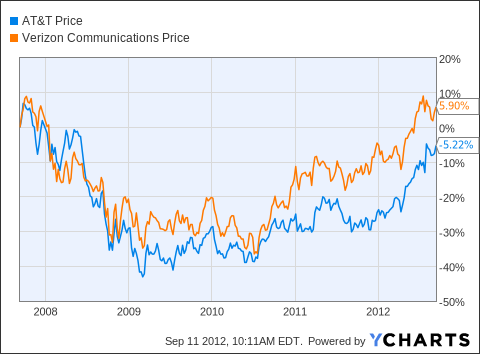
Mobile Operators should be quite happy with 2012.. it is turning out to be a good year for them. Wireless data revenues are climbing by around 20% YoY and 4G phones are just coming to market. This means your LTE investments should really start to pay off (if you get your data plans right). Motorola indicated that median usage of a 4G device is 11x more than a 3G device – 89MB/ day vs. 8 MB/ day. Also, 4G users are 62% more likely to check their phones than their 3G counterparts… As Jim Patterson notes, more checks mean more opportunities to display an ad.  If you can establish that business.

In 2Q2012, AT&T had 69.6 million postpaid customers driving. Operating income margin of 30.3 percent; EBITDA service margin of 45 percent. Wireless data revenues rose by $1.0 billion, or 18.8 percent, from the previous year, to $6.4 billion

For same quarter Verizon had 94.2 million total retail wireless customers, with a 7.3 percent year-over-year increase in wireless revenues; Data revenues were $6.9 billion, up $1.1 billion – or 18.5 percent; 30.8 percent operating income margin and 49.0 percent segment EBITDA margin

Apple – A Faustian Bargain?

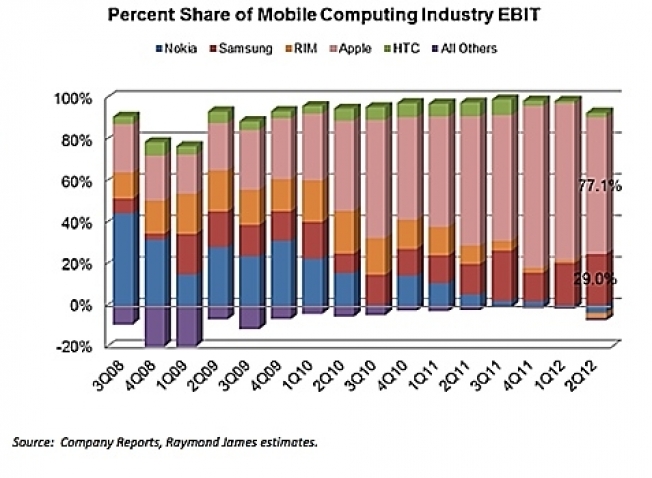
Eating 50% of the cost of a new iPhone will certainly help wireless data growth, but will MNOs develop any other business that can take advantage of this investment?  Raymond James analyst Tavis McCourt shows that Apple (AAPL) is expanding  its share of  profits generated by the mobile industry to 77% in the second quarter of 2012, while also accounting for 43% of its total revenues.

I may be naïve, but I don’t see Apple as the 800lb Gorilla eating everyone else’s lunch. I see Apple as a company executing against a strategy focused on delivering exceptional customer experiences with a solid brand and a fantastic product. Apple is successfully monetizing an environment they control: iTunes, Apps, iOS, iCloud, iPhone, Mac, … They didn’t start with a “control” strategy.. they started with by delivering customer value (and did not go out of their way ease switching costs).

A Strategic Guide to MNO Investment

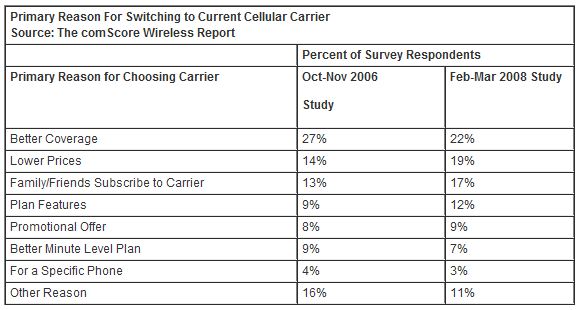
MNOs, why do customers choose you? This question more than anything else should frame your strategy. Investments in LTE certainly align here, as faster bandwidth improves a key customer requirement and enhances your core revenue.

However, it should be no surprise that consumers don’t want to use your applications and  services… your indigenous applications, or your approval (ex control over apps allowed) is not part of their buying decision (except in a negative context). Customers believe that Apple, Google, RIM, … create the platform.. and hold them accountable for delivering value. Customers want freedom to choose how the device works. They make this decision usually before they enter your stores.

These “platforms” will dominate the world much beyond what we witnessed in WINTEL. There is a unique convergence between the mobile and physical world: consumers interaction time,  global penetration, portability, connectivity…. The most substantial business impact we have seen due to this convergence (last 5 years) is impact to retail profit margins ( price transparency while shopping – see showrooming). The ability for consumers to check price in the store has been a key driver of retail margin compression, which has decreased from 4.2% in 2006 to 2.4% in 2010 (ref: IMAP’s Retail Industry Global Report 2010).

Even if MNOs could develop applications and services of the quality seen in the core platforms, or by small start ups, MNOs cannot possible coordinate and interconnect at the speed and scale of the platform providers. Google and Apple are quickly moving beyond isolated applications and into the cloud, thereby further accelerating their roles as Orchestrators of Value (See Blog – Stage 4 Value Shift).

MNO opportunities

I’m running out of time here.. need another cup of coffee .. may come back and polish this up. But here are the top areas I see

#1 Empty Space – Mobile Advertising

Leverage your assets in physical distribution, network ownership and consumer PII to reach well beyond anything google could provide. Mobile operators, you have data Google could only dream about… from ISP information (everything done in the mobile browser), to location, to direct customer billing agreements. You could target advertising like no other entity in the world.. plus you now have great 4G assets to deliver unbelievable content.

Mobile advertising is fundamentally broken. There is no one executing well here.. its because this space should belong to you. Go at this strong, hire a strong exec CEO and be willing to pay through the nose for a team comprised of less than 10% industry insiders. This is an advertising company.. not a mobile operator division. If done correctly, the revenue here will dwarf your mainline business in 3-5 yrs. I’ll be glad to quit what I’m doing and run it for you…

#2 Mobile – Physical connection

See my blog KYC $5B Opportunity. Many current businesses (finance, advertising, payments, …) require a physical touch with customer. In emerging markets we see telecom sales “agents” taking on licenses of bank/MSB agents so they can certify documents and take role in opening new accounts. I can tell you first hand as the exec running Citi’s remote channels globally I would love for VZ/Vodafone to take on a role in opening accounts. Additionally, think of the mobile phone operating as a form of digital signature for any type of business.. Or working to complete the biometric locks of Apple/Google/.. with an process that includes non repudiation and physical identification (VZ employee taking and witnessing the biometric registration).

I could think of many more that include Opt In/Opt out for advertising, ticket pick up, virtual concierge, or a cool and hip genius bar (renamed of course) where people are welcome to experiment with all the cool new apps and phones in your store… changing your store “experience” from volume dumb pipe and appliance sales.

#3 Service provider role

The first 2 were “leading roles”, this is “supportive”. Take a look at how your phones are  used in the real world, particularly in business. Create customer experience teams. How could your MNO support the business processes of others? In healthcare? In retail? In Airline/travel?

Take healthcare for example, although we have HIPAA, we still have few digital records agents. What could be done here?

You need a complete rework of your partnership strategy. Most MNOs have a model in partnership: buy exclusive rights.. Example is VZ’s deal to sell search to MSFT for $550M in 2009. This model deal continues to be the starting point in most discussions. Change happens rather fast in this industry, exclusive deals also don’t take consumer preferences into account. You must reworks your partnership strategy, away from a control mentality. Focus first on what the consumer wants.. how can you best support it? That can’t be radical… ??

#4 Business wireless

When I go to top 20 retailers to talk about mobile.. their immediate response is: “how do we stop it”? How can MNOs help retailers enhance their business?

Battle of the Cloud – Part 2

29 August 2012

Previous Blog – Part 1 – May 11, 2012

Let’s update the Cloud Battle story and discuss events since my last post on the subject

Square, Visa, Google, PayPal, Apple, Banks, … have recognized the absurdity of storing your payment instruments in multiple locations. All of us understand the online implications, Amazon’s One Click makes everything so easy for us when you don’t have to enter your payment and ship to information. (V.me is centered around this online experience). Paypal does the same thing on eBay, Apple on iTunes, Rakutan , …etc.   But what few understand is the implication for the physical payment world. This is what I was attempting to highlight with PayPal’s new plastic rolled out last week (see PayPal blog, and Target RedCard). If all of your payment information is stored in the cloud, then all that is needed at the POS is authentication of identity (see blog).

The implications for cloud based payment at the POS are significant because the entity which leads THE DIRECTORY will have a significant consumer advantage, and will therefore also lead the breakdown of existing networks and subsequent growth of new “specialized” entities. For example, I firmly believe new entities will develop that shift “payment” revenue from merchant borne interchange to incentives

Since May, the following “significant” events “in the battle” have occurred:

  • Retailers have launched MCX with Wal-Mart’s Mike Cook as the lead. I want to emphasize, this is not “mobile payments” but rather a low cost payment network (Cook talks about $0.05/payment). Some retailers will seek to integrate their loyalty card, others will create plastic (see Target RedCard), others will certainly couple with mobile. WMT will likely integrate with a virtual wallet that manages digital coupons (Coupons.com likely leading)
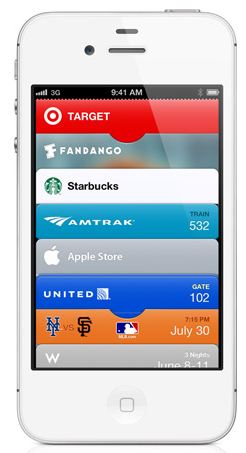
  • Apple has rolled out Passbook in June.. See my Blog, and hardware analysis from Anandtech of why there is no NFC.
  • PayPal had a marketing announcement with Discover. Why would you announce something like this with no customers? Paypal is expanding its network… but merchants are just laughing.. MCX wants a $0.05 payment, Durbin gave them a $0.21 payment and Paypal wants to get 180-250bps. As you can tell, I don’t think much of this, as the Merchants are still in control of their payment terminal. This is also not an exclusive deal with Discover. I expect 2 other major players to partner with Discover in next few months. Paypal just wanted to run with this announcement before the other products come out. I also want to emphasize that DFS is a BUY. They will be a partner of choice as they run a subscale 3 party network that can adapt much more quickly than V/MA. As a side note,  Paypal will likely expand distribution of their own plastic.  See related blog.
  • Google rolled out Wallet 1.5 on August 1 (see blog). This is one of the biggest moves in payments and provides an enormous retailer value proposition (aligned to MCX). Google didn’t follow PayPal, Passbook, or Microsoft.. they rolled out product that was 1.5 yrs in progress.  Google’s new cloud wallet allows the consumer to select any payment method, and provides the merchant with a debit rate (Bancorp non-Durbin 1.05% + $0.15 (note Google/Issuer can lower this for merchants, as any issuer could, this is a MAX rate). Google is CURRENTLY loosing money on the payment side of the business in hopes of making it up on the advertising side. This is no marketing announcement like Apple, Microsoft and Paypal.. this is a product announcement.. it is working today in my new Galaxy phone. This is also the first PRODUCTION cloud wallet for the POS. Apple, Amazon and Paypal dominate cloud wallets in eCommmerce and mCommerce. Google and Amex’s Revolution money are the only one’s doing it at the POS.
  • Square acquired all 30M Starbucks mobile payment customers (see Blog). Square has done a great job acquiring merchants.. but was hurting on the consumer side. Square wants to build network and needed a pop on the consumer side. Square’s business is pivoting toward marketing and consumer experience. Within the next year, the little Square doggle will be a thing of the past. Starbucks is committing to the Square register experience, and Square is relabeling “card case” to “Pay with Square”.
  • LevelUp is making payments “free” for merchants as part of a loyalty value proposition. This is an example deal.. expect more to follow. Issue is that different merchants have different priorities. LevelUp is focused in QSR/Casual Dining and is operating as part of a loyalty play. I’ve outline their revenue in this blog, don’t think it is sustainable unless they can move into acquisition.
  • ISIS has lost key executives in its product area, AT&T is rumored to have a NFC/Wallet RFP of its own out and even Verizon is planning to let Google go ahead and put its wallet on the Samsung Galaxy III phones.. after all what choice does it have?
  • Card linked offers and incentives in the cloud. No one is making money in this space, large retailers are not participating, hyper local merchants (who are interested) are very hard to sell to, and consumers don’t see relevant content (thus redemption rates under 2%).

Where are the cloud battle lines? Well most significantly the battle lines are forming away from NFC (as I stated in January). Even my old friends at Gartner have caught up and placed NFC in the trough of disillusionment. To restate, NFC is not bad technology.. but it delivers no “value” in itself beyond control. Mobile operators have consistently failed to build a business around a “control” strategy (see my Walled Garden Blog). In the  ISIS example they mandated use of credit cards only, as this higher credit interchange was the only way to make revenue. Well guess who pays the freight here? Yep the merchants…  Wal-Mart and its peers were not thrilled at giving issuers and MNOs 3.5% of sales for the privilege of accepting a mobile payment.

The Cloud battle is complex, as the strategies are about MUCH MORE THAN PAYMENT. Payment is the ubiquitous service that is the last phase of a successful marketing, engagement, shopping, selection, deliver, retention, loyalty process. Leaders from my vantage point:

Payment Networks:

  • Mastercard focused on acting in supporting role globally.
  • Discover similar to MA, but with much greater flexibility as it operates in a 3 party network and is both issuer and acquirer.
  • MCX – Not a leader yet, but has CEO mindshare of every top US retailer. They seem overly focused on the cost side. There is a very big whole in their customer acquisition strategy. MCX is bidding out its infrastructure now, my guess is that Discover or Target will win it.. and the the RFPs are just a way of keeping Banks “in the tent” to keep them from changing ACH rules to kill it like they did to Scott Grimes at Cap One (decoupled Debit).

Physical POS:

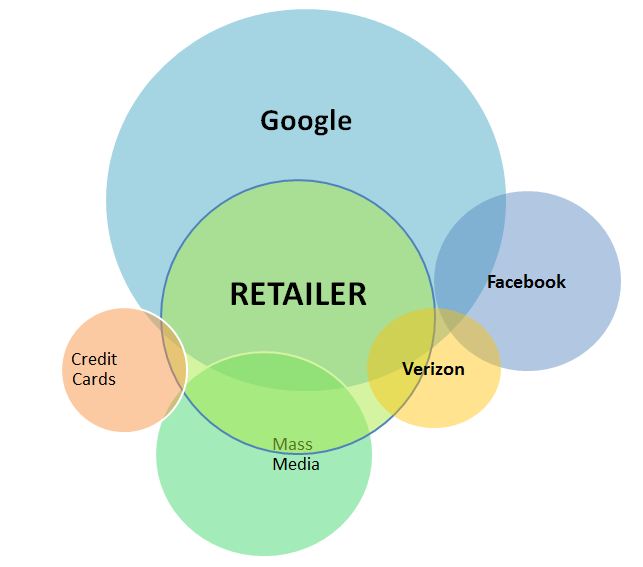
  • Google – has more consumer “accounts” than any company on the planet. Can it convert them to accounts with a linked payment instrument? Google also “touches” more customers, more times per day than any other company, its heavy influence in the shopping process positions it well with retailers. Also has the best retailer sales force of anyone on this list, as they bring in customers to retailers every day. Android/Google Wallet….
  • Square – Best customer experience hands down (register). It also has the most traction among small retailers

eCommerce/mCommerce:

  • Apple – expect Passbook to dominate mCommerce. It will be the killer app.
  • PayPal – Challenged in market adoption beyond eBay/GSI customer base. Top ecommerce sites like Amazon and Rakuten have their own integrated payment, also 50% of eCommerce/mCommerce goes through Cybersource which Visa acquired. Paypal’s future growth driven by international
  • Amazon – leading eCommerce/mCommerce player. When will it take one-click beyond Amazon? Amazon’s experience is best from end-end…. PayPal/Apple will operate around the periphery of non-Amazon purchases.
  • Rakuten – “Amazon of Japan” who now also owns buy.com. Fantastic experience and leading eCommerce loyalty program.

How many places do you want to store your payment credentials? Who do you trust to keep them? What data do you want providers to know about you?

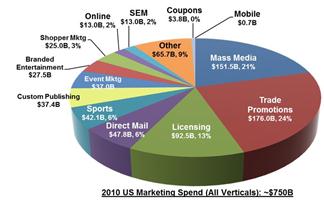
From a macro economic perspective, total payment revenue for all major participants is just under $200B in the US. Total marketing spend in the US is over $750B. Total retail sales in the US is $2.37T (not including oil/gas, Fin services, T&E). Marketing is fundamentally broken… payments is not. Retail sales gross margin has been compressed from 4.2% in 2006 to 2.4% in 2010. Who is best able to execute on the combined retail and marketing pain points? Who can be retailer friendly? Consumer friendly? Marketing friendly?

I start my analysis with #1 the consumer value proposition, and #2 the merchant value proposition. Entities like Google, Paypal, Apple already have tremendous consumer relationships and traction. They thus have very few “acquisition” costs. However, these entities do bear the costs of changing customer behavior. There are many approaches for changing customer behavior:

  • Incent behavior – direct/indirect/merchant
  • Customer Experience (ex Square)
  • Service integration (reduce effort or # of parties)
  • Reduce risk – financial (security/anonymity…)
  • Reduce risk – purchasing (social, community reviews, …)
  • Value proposition in commerce process (indirect incentives)
  • Marketing
  • ..etc

Other groups like MCX and ISIS bear the cost of both customer “acquisition” AND behavior change for: Consumer, Merchant or Both. As I state previously. one of my favorite arcane books I’ve ever read was “Weak Links” I’m almost reluctant to recommend it because it is so good you may jump ahead of me on some of my investment hypothesis. One my favorite quotes from the book

Scale-free distribution (completely open networks) is not always the optimal solution to the requirement of cost efficiency. .. in small world networks, building and maintaining links between network elements requires energy…. [in a world with limited resources] a transition will occur toward a star network [pg 75] where one of a very few mega hubs will dominate the whole system. The star network resembles dictatorships in social networks.

Networks like V, MA, PayPal, Amex and DFS are working to participate in this new Macro economic opportunity. But established networks are hard to change

“The network forms around a function and other entities are attracted to this network (affinity) because of the function of both the central orchestrator and the other participants. Of course we all know this as the definition of Network Effects. Obviously every network must deliver value to at least 2 participants. Networks resist change because of this value exchange within the current network structure, in proportion to their size and activity.”

The implications for cloud based payment at the POS are significant because the entity which leads THE DIRECTORY will have a significant consumer advantage, and will therefore also lead the breakdown of existing networks and subsequent growth of new “specialized” entities. For example, I firmly believe new entities will develop that shift “payment” revenue from merchant borne interchange to incentives (new digital coupons).

The current chaos will abate when an entity delivers a substantial value proposition that attracts a critical mass of participants. Today most mobile solutions are just replacing a card form factor… this is NOT VALUE. I am currently placing my bets on solutions that merchants support (Square, Google, MCX, LevelUp, …) as this is a key “fault” of almost every other initiative.

Comments Appreciated (as always sorry for the typos…)

PayPal vs Google (at POS)

3 Aug 2012

Paypal COULD do everything that Google wallet does today.. so why won’t they? (Note I’m talking about the Physical POS… not online)

I’ve had a PayPal debit MasterCard for 6 yrs, when I use it at any merchant PayPal deducts from any stored balance I have, and then hits one of my stored payment instruments. I use this card exclusively on international trips because they have always offered the best cross border fees (.. and just 3 years ago paid an interest rate higher than any of my banks). I looked on the back of my new PayPal debit card and see that JP Morgan Chase is the issuing bank. Given that Chase has over $10B in assets, this card costs the merchant $0.21 + 5bps in the US. This is a great deal for retailers. A REALLY great deal.

Why is PayPal pushing out its own Plastic? Unbranded? Obviously they really don’t like the standard debit interchange (above) and want a bigger cut (than $0.21 flat fee) from the retailer. (see PayPal at POS)

Why won’t PayPal expand its online wallet to allow me to select any card for any given purchase? In this I mean creating an app that works like Google wallet, prompting the customer “what card do you want to use”? The answer is that they want to drive the underlying account selection decision to ensure the instrument with the lowest cost is selected.

Take a look at your payment instruments in PayPal today, they let you define a DDA account as “primary” but NOT a card. In other words PayPal incents you to link DDA in order to get money out.. then PayPal looks to leverage this account whenever possible (sometimes taking take settlement risk). The most costly customer for PayPal would be an Amex customer with no linked DDA and a PayPal debit card (for ATM withdrawals). See my related blog on PayPal’s funding mix (estimate 150bps)

PayPal is a payments business.. not an advertising business. Their goal is to maximize revenue. This is not a bad thing…  But their recent moves are a “replay” of what happened to the bank payment networks as they pushed to ramp up merchant fees and grow interchange revenue at the expense of retailers.  Why on earth would any merchant agree to take on Paypal’s new plastic? If it is above $0.21 it makes no sense at all… UNLESS Paypal is driving incremental sales.

PayPal today could create a Virtual “wallet” tied to either a Sticker or a Card that would work across Android, iOS, Blackberry, … and do everything that Google has done.. Why won’t they? Because the instrument must operate as a debit card, and the interchange “arbitrage” could kill them. In other words they will bear the cost of 350bps for a CNP Amex transaction and only charge the merchant $0.21 flat fee.  If they rolled this out, I’m sure they would have MASSIVE success.. but if customers unlink DDAs and delete debit cards they would risk a funding mix that is “unsustainable” because they have no other revenue channel.

Google

The true “payment innovation” from Google has little to do with payment and much to do about risk management and monetization of data. Google drives business to retailers today.. google helps consumers find the right product… they also “know you” from your history. They can use this information drive value to consumers AND to retailers.. they are also willing to take a very big risk that the benefits of Google will out weigh the COSTS of WALLET. Google Wallet will likely loose money on every single transaction. If you never accept an offer, incentive or coupon.. never search.. never use maps to find a business, never use Zagat to find a restaurant, never watch you tube commercials… they will likely loose money on you.   However Merchants will ALWAYS win.. no matter what, they will have the lowest cost payment when accepting a Google payment.

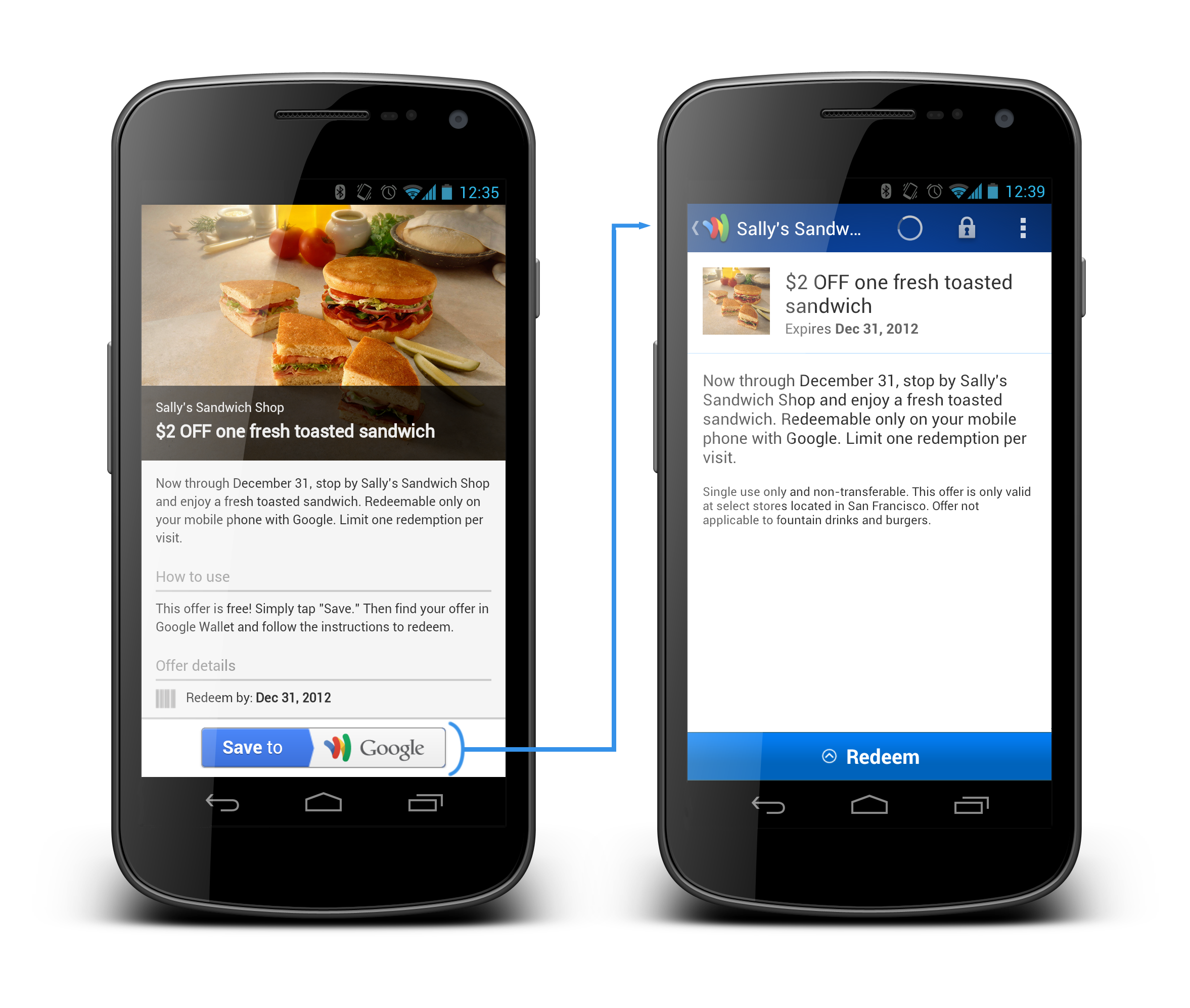
This is either INNOVATION OR INSANITY.  From my perspective, what Osama and team have done is fundamentally game changing.. ! Bearing costs, giving consumers and retailers complete control.. in the hope that they can deliver value in other services. Payment is now just a small part of an overall Commerce Process. For example, a “new” feature of Google Wallet that has not received enough attention is the “saveto” API release at Google I/O . Google allows merchants to store 3rd party offers and payment types in the wallet. These offers don’t have to be created by Google.. it is a true “wallet” function. 

As I stated yesterday,  Visa, Mastercard, Amex, all of the banks are REALLY worried about data. Google will be in a position to deliver value to consumers independent (or dependent) on the card you use. Few other companies can do this… Consumers will always have a choice.. no one will be forcing them to use their Google wallet.  But why not? Why didn’t the banks use their information to help me earlier?  Why did the banks and payment networks stop retailers from passing their real costs along, of delivering incentives that they could control?

This “aggregate” model is something ANY company could do in short order.. Square is doing it, Revolution Money, LevelUp, … but no one else can make it profitable.

PayPal’s new POS “hope” is to re-engineer the customer experience at the POS, allow merchants to throw away their custom POS terminals.. As most of you know I believe Square Register was by far the best POS experience I have ever seen. From PayPal’s June Video it looks like they agree and have replicated the Square Register “voice” experience. While the customer experience is FANTASTIC.. it did not bring the customer into the store.. nor is payment cost competitive with Google.

[youtube=http://www.youtube.com/watch?feature=player_profilepage&v=CMByV-k9Oc4]

Investment take

PayPal has enormous runway left for them globally. I don’t see Google wallet denting current growth for 2 years. However this is VERY disruptive. IF google is successful in getting all Android users to register with a payment instrument (like Apple does in the App Store), and Google pushes Wallet out beyond NFC phones, it could result in a Tsunami wave which Paypal could not overcome in mCommerce.. This is a scenario where there are 3 primary mCommerce payments options: Apple Passbook, Google Wallet and Amazon.  For physical commerce.. nothing will impact this world in next 5 yrs if it does not entail a physical plastic card. NFC phones and payment terminals just aren’t materializing fast enough.  IF google creates physical plastic.. watch out…  In this scenario Google should  be pursuing an unbranded card.. “let the consumer decide”.. .”let the retailer influence” these are themes not heard in the payment world and would seem to resonate.

Google Wallet 2.0 – Who does not benefit?

August 2, 2012

Yesterday I covered the winners… today I cover the flip side.

Mobile Operators

Most obvious is mobile operators payment efforts, at least those bent on controlling the NFC SE in a walled garden strategy. I covered this topic last month (Carriers as dumb pipes). As a refresh.. 5 years ago carriers were going to charge applications each and everytime they accessed the GPS.. you can see how that worked out…

Its really a shame.. Operators have tremendous distribution, brand, cash….  What they don’t seem to have is anyone that knows how to run a platform business (related blog). Running a platform is about creating a “sandbox where everyone can play and make money”.. Apple has it.. of course they also have 75% of mobile profits (related blog). Most of my frequent readers already know what I’ll say next: Control is NOT a value proposition.

The big problem with payments?  There aren’t any problems (and margins stink). Why focus on it? The mobile handset has the opportunity to do so much more. Google has an ad business which will greatly benefit from added payment information. It will be in a position to help retailers and consumers and deliver value (note I didn’t say banks). The MNOs don’t have a business that can leverage payments, and they are not the greatest at partnering. They couldn’t even work with Google… a company that built Wallet and Android for free. Just what were they trying to win? (related blog)

My STRONG recommendations to carriers: go partner w/ Google now.. If you thought Apple was a one time event you are sorely mistaken, google has more commerce assets (virtual and physical) than anyone in the world. Another recommendation? Focus where you can win easily, AND DELIVER VALUE (see KYC a $5B opp)

Big Banks

(At least the credit card divisions). Most of card teams were trying to position mobile as a “premium” payment service. Its not a total wash for you, given that Google is charging merchants regulated pre-paid rates while having to pay most of you full interchange… perhaps even CNP interchange. But while you see a quick win here remember that incentives can be tied to a card. If you don’t play nicely my guess is that you will see customers shift spend, particularly for small items.  Of course one big weakness of the Google wallet is the refund/return process.  Additionally, Google Mastercard consumer purchases will be covered under Reg E, vs the greater protections afforded consumers with a credit card under Reg Z.

The biggest bank loss however is Data.. not much of a problem today given the number of Samsung Nexus phones are in the market (.. with google wallet). But what if Google does issue their own contactless sticker.. like I have on the back of my iPhone? Why NFC at all… just a Google card to swipe would allow you to have all of the functionality. In the new Google wallet world, they will see all transaction data.. just like Paypal does. Difference Google knows how to use it in advertising.

Card Linked Offers

It just a guess.. but now I can have offers linked to any card I use.. For merchants TXVIA could create virtual pre-paid cards for you at no cost and let the “value” of the offer reside there. Basket level, or item level with POS integration. The writing is on the wall..

NFC Ecosystem

There are pros/cons here. If the carriers supported Google wallet it would be mostly a win.. We may actually see NFC handsets be common place… but not if people have to root their phone to install Google Wallet.  Apple will eventually put some sort of new combined SIM/NFC/BT radio in its phone (related blog). In this future Apple Passbook world I can guarantee the carriers won’t be keeping any version of the iPhone in a Garden.

Short term impacts with Google Wallet? The First Data TSM operates with Google as the SE owner and service provider, no SWP UICC chips, no OTA provisioning, …

Comments appreciated.

Google Wallet 2.0 – The Winners

Today Google Wallet 2.0 launched (Google Blog announcement)

[youtube=http://www.youtube.com/watch?v=VuFVsaFCzsw]

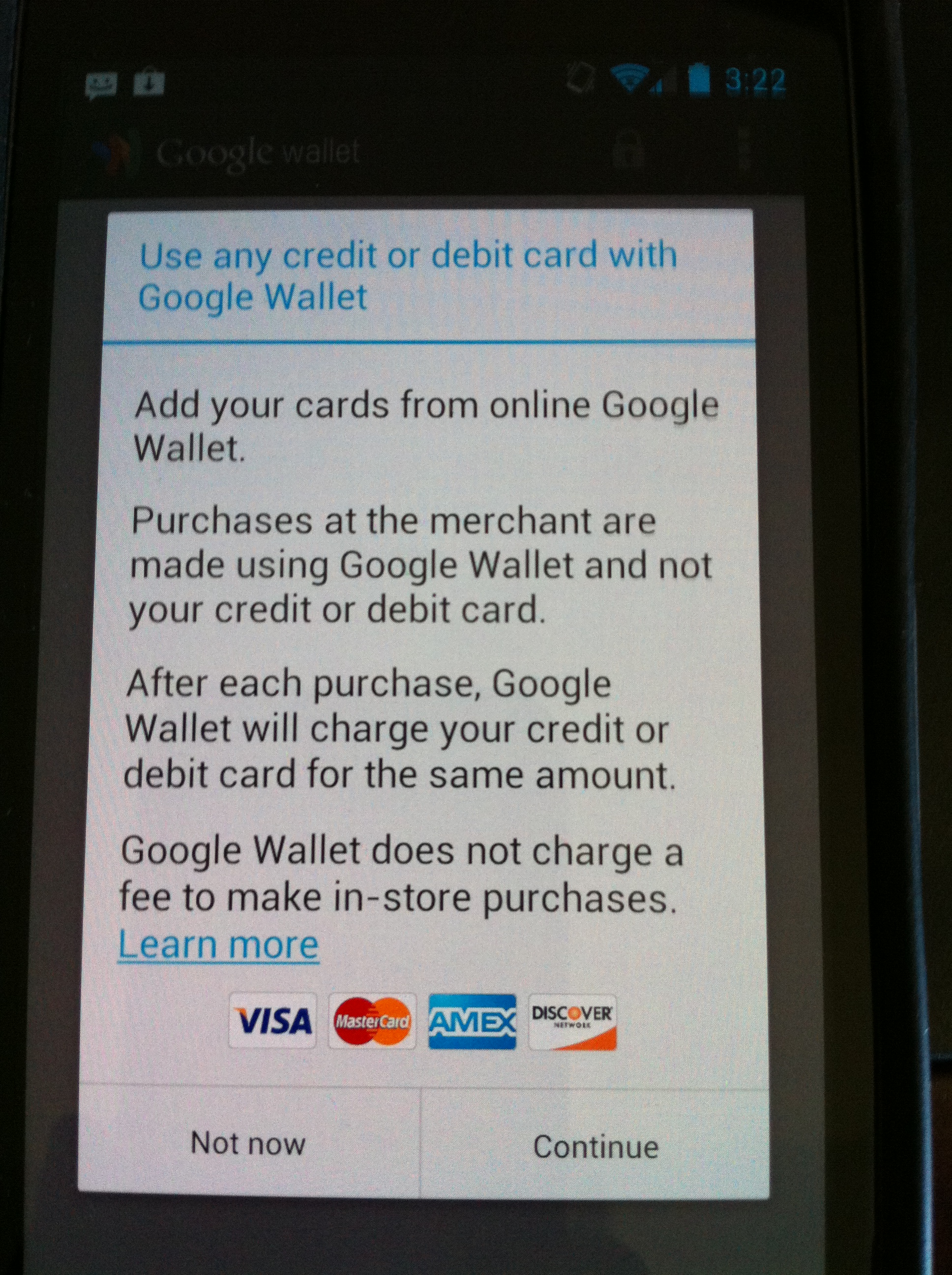
Google will now allow me to add any card I want.. my Bank of America Debit, Citi Credit, my business Amex… My cards sit in the cloud and I can access them on the device at the POS, online, or for a mobile purchase. The device has a single card that acts as an “ID” that points to your account in the cloud. The gateway/acquirer then resolves this ID to the card (stored in the cloud) which you want to use and then processes an authorization with the corresponding issuer. Not all that different than how PayPal and Amazon work today (which card do you want to use)?

Google’s approach has empowered consumers and destroyed the ISIS Walled Garden Strategy. Banks no longer have to queue up to do OTA provisioning.. consumers just add their accounts. Retailers no longer have to take credit cards in mobile payment…

My view is that this is a huge leap forward, but there are at least 2 more steps to go. Allowing consumers to control the wallet must be followed by an ability for retailers to deliver value (independent of the latest phones). After all there are no payment problems in the market today (none of us ever left a store because they would not take our form of payment). Retailers are more concerned about driving top line sales growth, than bottom line card costs.. but the tools to do either are limited.

The wallet has the opportunity to be the “hub” of many new commerce experiences. What other company has the tools to create advertising campaigns? Shopping experiences?

A key “unknown” benefit is how broadly Google will expand the functionality of wallet outside of NFC. Afterall if I have only one master account.. I really don’t need an NFC phone.. I could use plastic or one of those stickers.  TXVia can certainly add value here.

Who are the winners?

  • Consumers. They control what goes in…
  • Retailers. Every retailer today should be thinking of having a pre-paid/gift/loyalty card with Google. Why not? Issuance is 100% electronic and should cost nothing. The other immediate benefit is lower cost (blended) due to debit mix and a new “platform” to offer targeted incentives (google offers) that is integrated into the payment.  Updated.. it looks like all Google wallet transactions are at regulated pre-paid debit rates. With Google wallet.. every transaction is at the lowest transaction price. Bancorp Bank has assets of $3.011B and is thus not covered under Dubin. Hence my best guess at the interchange is 1.05% plus a $0.15 (see comments below).
  • Small banks. Now your cards can go in the wallet … TODAY. You don’t have to pay ISIS that $1M after all.

Hey.. I could write more.. sorry for the short note. My previous blog gives a few other hints http://wp.me/pv8i-uv

Note the good discussion below.. my read is that the Google Card is a debit covered by durbin.. So merchants win big on card costs here. Everything is a debit…