Apple and NFC

Apple and NFC..

Nothing really new here for the NFC crowd. No new information..  Purpose is to paint a picture by which investors can make a call.

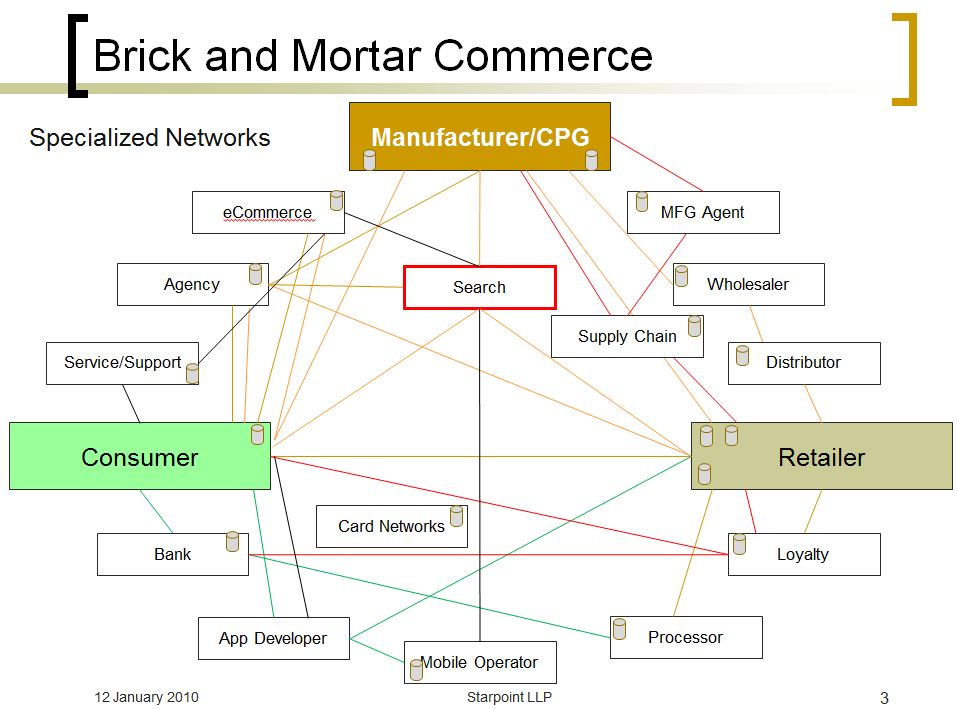
Most of the issues associated with NFC today are NOT technical.. but rather business: What value can it bring? Who controls it? Who makes the money? How is it shared? For payments… NFC has been a complete bust (with the exception of Asia). Retailers just aren’t excited about the prospect of paying credit card interchange (3.5%) for the privilege of accepting a mobile payment which funds a 12 party supply chain  (necessary to make NFC work).

The WSJ (July 6, 2012) and I both have consistent information that Apple will NOT be rolling out NFC in the iPhone 5. If true, I believe Apple’s exec team is taking a brilliant approach to be a late follower here. Let everyone else pay the freight to educate the customer, and establish a high level retailer POS value proposition (with associated retail infrastructure). Apple is much better positioned to extend the App Store experience into mCommerce.. and control the customer end-end experience. Apple will also likely expand “selectively” into physical commerce areas like ticketing.

To be clear, I’m not positioning that Apple has run away from NFC.. but there has been no success to date and there is no reason for Apple to run into this space. In order to monetize and sort of physical POS solution, Apple must have a business structure that can orchestrate a very complex “physical commerce” value proposition. Keep in mind Apple doesn’t have much of a sales force to cover advertisers AND retailers globally. Rather than “focus” on the POS, or implementing standard NFC chipsets, I see Apple doing something “unique”… What is it?

I was meeting with senior NFC execs this week, and the consensus view is that Apple will likely redefine phone hardware architecture.  Most of you have read about Apple’s recent patent application which would allow the SIM to be logically placed within the SE. Also there are rumors about expanding the capabilities of the Radio and Controller to also cover Bluetooth functionality. The “value” that an integrated hardware solution? Not that much different than what NFC alone is capable of.. but it would greatly reduce footprint, power, time, and perhaps even expand “throughput” (example Accelerating/bypassing BT pairing: NFC is  424kb/s while Bluetooth V2.1 is 2.1 Mbit/s).

Although far from being an expert in this area, my summary view is that Apple recognizes the need for a secure radio and data store in the device that it can control.  A metaphore for an ID.  How do they want to control this ID? Well they certainly need to secure the wallet access (AuthenTec $356M last week, plus rumored IRIS scanning).

This approach is opposed to that of the carriers all of which are working very hard to “standardize” on an NFC architecture (Single Wire Protocol – SWP) that they will control. Apple’s plans are firmly in the opposite direction, and a brilliant business move. Giving carriers the control over this utility would be akin to letting them run an app store that they control.

Apple may be running much faster than anyone in the industry knows toward this vision. Perhaps they have already indigenously created this new combined secure element/UICC/BT Radio. Although I see no need for them to run with this early… But if they did create this capability in the iPhone 5 they will certainly have the control to govern how it is used.

What does this means for investors? Perhaps you start by asking Vivotech’s .. as they just folded up shop after 12 years. A fantastic team with a rock solid product line.. their fault? Betting  NFC would take off sooner.  Given Apple’s unique ability to capture mobile ecosystem profits it is always tough to find areas to nibble.  On the software side, how can new companies help Apple orchestrate value propositions in the physical world? Retail? Ticketing? Healthcare?.. The times.. they are a changin…

Apple Passbook: No NFC Here…

I’ve covered this topic quite a few times

As most of us have known Apple has been out of the NFC game for some time (18mo+). It’s just amazing that the mainstream press can be so caught up in a disinformation hype cycle that seemed to have been started by some kind of patent application. Yesterday’s WSJ had a fantastic article on Apple’s plans.

What makes for a “successful” consumer wallet? From previous post:

Customer Trust, Customer Control, Convenience, Ubiquity (opposite of lock in), Intuitiveness, Experience in Use (buying, redeeming, accessing, ..), Security,

If I have a wallet that only accepts 3 cards that are not accepted at any of the top 20 retailers (ie ISIS), it is of little value. Why not let consumers control what goes in? This is where carriers must get to in order for NFC to survive. Even then, NFC phones are far from my recommendation. After all if your payment information is locked in a mobile phone how do you use it when you are at your computer buying something on Amazon? Locking information in a phone is just plain stupid in the age of the cloud.. most agree that individuals should have a their information in a cloud they control. The NFC zealots reading this blog will respond that it NFC doesn’t require a network and is more reliable… my response, the POS and payment terminals are connected.. NFC doesn’t need to hold the card in the SE.. it just needs some sort of identifier.. or in the Square cardcase example no NFC at all just your voice print. After all if there is no auth from the payment network.. the transaction will not happen.. so something is connected in 99%+ of card transactions.

I’m very impressed that Apple’s exec team has kept the iPhone away from NFC… strategy brilliance is an understatement. By expanding Apple’s ownership of Digital Goods (old blog here with financials) into mCommerce (ie physical goods bought via phone) and narrowly aligned Physical commerce (ex. Ticketing) they can maintain ownership of the entire consumer process.. from marketing, sales, purchase and “delivery”.

Apple’s unique ability to garner 75% of mobile handset profits is shifting from DESIGN to VALUE ORCHECTRATION (see blog). No one can orchestrate value in NFC (see 12 party mess).  What is truly ironic is that as the carriers spend hundreds of millions of dollars on NFC and their walled garden strategy to “force control”, Apple and Google will be further ahead in coordinating value in new networks. This value delivery outside of the mobile network will further cement carriers roles as dumb pipes (related blog).  This seems to support my hypothesis (often stated) that it is nearly impossible for legacy networks to adapt in delivering new value propositions.

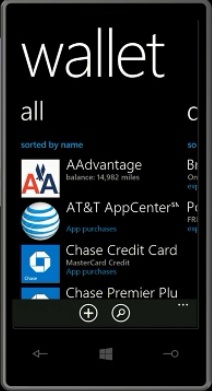
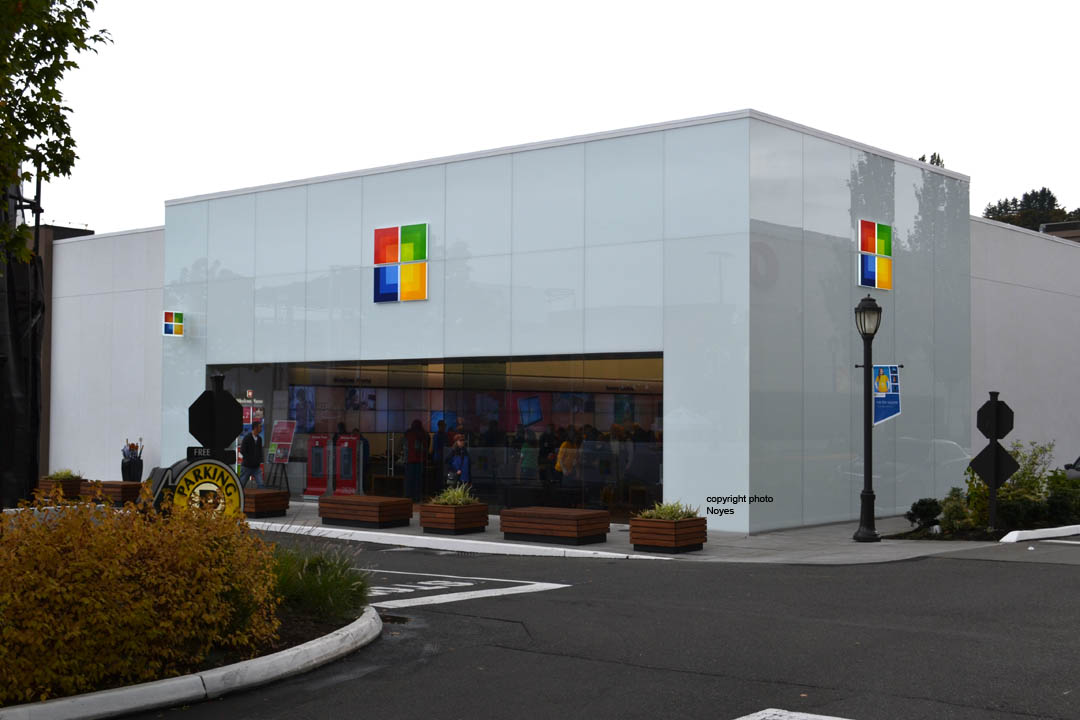
MSFT has a Wallet too?

23 June 2012

From the Window’s Team Blog

Wallet: Windows Phone 8’s new digital Wallet feature does two great things. It can keep debit and credit cards, coupons, boarding passes, and other important info right at your fingertips. And when paired with a secure SIM from your carrier, you can also pay for things with a tap of your phone at compatible checkout counters.

From PC Magazine

Microsoft is taking a somewhat unusual approach to a digital wallet by introducing a Wallet hub app and APIs that let third-party developers build applications to process transactions. What makes this so unusual is its use of “Secure SIM” cards.

Microsoft has some very interesting assets and experience (see Wikipedia on wallet, passport, liveID).

  1. Microsoft has 3 POS systems (see overview) with Dynamics as their “go to”.
  2. Passport “experience”
  3. Phone OS
  4. Developers (will leverage core Win 8)
  5. Cash to compete
  6. Skype
  7.  aQuantive (digital advertising)
  8. MSN Money
  9. Global sales/distribution
  10. Patents

MSFT Hurdles (Wallet focus)

  • No phone OS adoption
  • Brand
  • Consumer Demographics of Phone 8 buyer
  • No “killer” apps/capability compared to Android/IOS
  • Minimal credit cards stored w/ LiveID
  • Current phone “app” footprint
  • Handset manufacturer commitment (See HTC article)
  • Time for Nokia to support
  • How on earth are they going to Sync a card in the NFC SWP SIM with the Wallet Hub?
  • US MNO Support
  • Time to complete large scale pilot
  • Subscale digital Advertising platform

Why announce at the developers summit?  My guess is it has to do more with MSFT’s desire to turn on a developer community for the digital goods. MSFT is in control of the platform here, while the POS and NFC is far in the future. So this announcement is really aimed at competing with Apple’s Passbook in areas such as in app billing and mcommerce purchases.

I will be very impressed if MSFT can get 100k handsets active w/ Orange, and over 20k a month using NFC in a SWP SIM.

MSFT.. are you doing something unique this time? My recommendation: build a Platform team that crosses your organization. Task them to build  end-end reference architecture(s) from phone to POS from mobile advertising to redemption,  … etc. Then give it away… Take a look at what Square Register has done and reinvent the POS experience. Be original.. again.

Google Wallet Thoughts

13 June 2011

Please see my disclaimer at top.. this is a biased blog.. (comment necessary because the PayPal folks don’t like me this week)

The rumors of my death have been greatly exaggerated…

–       Mark Twain

To restate from my tweet yesterday… Google Wallet Dead? Come on.. Just draw a simple chart 50 engineers working on a May 2011 go live.. and now 13 months later Google just stops working on it ?… just goes away? The Wallet team has only gotten bigger.. Do honestly think 50+ engineers are are all working support? Obviously something new is coming up..

What will the “new” wallet address? Well let’s look at the obvious issues:

  • Consumers don’t use the wallet after an initial “novelty phase”. I could have saved Google quite a bit of money on this one.. this is what my NFC pilots in 7 countries taught me at Citi. This problem is not unique to Google… it effects all NFC pilots.  Customers just don’t care whether they tap or swipe. This is the central problem that must be addressed.. there IS NO VALUE in the payment itself.. but rather the COMMERCE PROCESS. (see my previous posts)
  • Carrier control of the NFC element. This is just a mess, as is the entire supply chain (see 12 party fur ball). It is beyond repair. The carriers want to charge for each and every access of the secure element. That’s right, they want to charge credit card companies $1M a pop to get their cards in, and Hotel room providers for the right to enable phone as door key. This is a replay of their “walled garden” strategy they have tried many, many times (see Carriers as Dumb pipes).
  • Ubiquity (what goes in the wallet). Do Consumers really want to use a wallet that only accepts 3-4 specific issuer cards? Google wants customers to put whatever they want in the wallet, at no cost.. loyalty cards, debit cards, prepaid cards. Their “problem” is neutrality.. they appear to be a competitor to everyone (see related blog). Google wants to “enable” everyone.. if banks can create value… fine.. if merchants can create value.. fine. .but they are not taking sides. After all it is the consumer that chooses what works for them. For example, I don’t use Target’s iPhone app for price comparison inside a Target store…
  • Ubiquity (phone types). There is a limit on number of NFC enabled phones available for consumer use. You can’t create momentum by forcing people to upgrade phones.. that plays into Carrier control. The objective of any Wallet is not to force a phone upgrade, but to deliver consumer value.. to every consumer.. online and offline (my Blog on TXVIA). You must feel sorry for the carriers.. they would love to ship 2M+ SWP enabled phones.. but there is no supply chain cranking them out.. (yet I digress).
  • Ubiquity – Acceptance. The big retailers are not jumping over themselves in a rush to support tap and pay. Who pays for all of this new infrastructure? How can small merchants bypass stand alone terminals from Verifone and specialize cash registers (ex Square’s Register solution is superb)?
  • The most important element:  VALUE PROPOSITION. Take a look at Google’s merchant list for launch (http://www.google.com/press/pressrel/20110526_wallet.html), now take a look at ISIS (http://news.paywithisis.com/2012/05/15/isis-adds-first-merchant-partners/).. Notice a difference? The big retailers are running away from the carrier/bank back mobile payments initiatives because #1 they don’t drive customer acquisition/sales  #2 have higher cost payment instruments (credit only). New value propositions must impact both.. See blog on Retailer’s Wallet plans

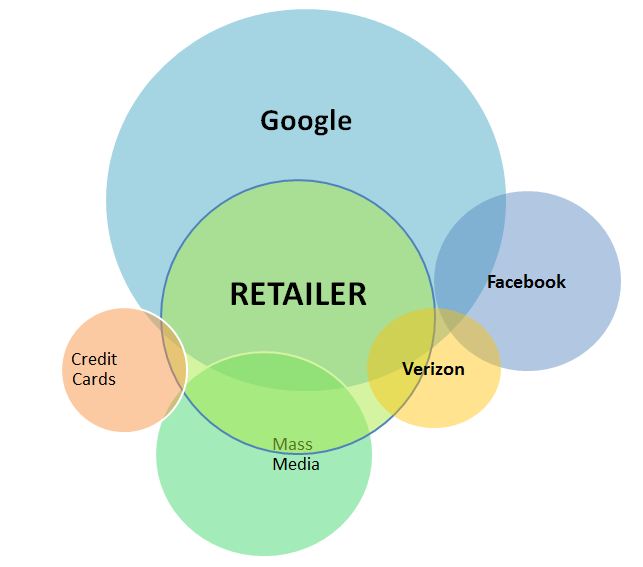
As I’ve stated before, pretend you are a retailer and draw a Venn Diagram. Put yourself in the middle. Now think about how you are going to influence customers before (or while) they shop with you. What % of customers does Verizon or ISIS currently influence? How about the banks? PayPal?  Draw a circle for each… base the size of the “influence circle” on number of times these companies influence with YOUR consumers every day. INFLUENCE.. NOT SERVE or INTERACT?

Folks, the challenge is NOT PAYMENTS.. but Value in COMMERCE.. Value requires supporting consumer and retailer interaction in 100s of ways.

I have no idea of what Google will release, or when they release it.. but I do have a great deal of confidence that it will be a major step forward in addressing the issues above.

Groupon Cash Register?

31 May 2012

As reported in today’s WSJ, and 6 days ago by Bloomberg, Groupon is working on a Square competitor… So the list of companies that now enable any mobile phone/tablet to be converted into a POS to 7?

  1. Square, $4B GDV Run Rate
  2. Intuit/VZ, goPayment
  3. FirstData mobile pay
  4. PayPal + Roam?
  5. Groupon?
  6. Google?
  7. +10 other small start ups leveraging hardware from Verifone, RoamPay, MagTek

I joked in a tweet that perhaps this is why IBM sold its RSS division to Toshiba for $850M (a $1.15B revenue business).

What is value here? It is card acquiring? POS systems? Advertising? or something else?

Most of us would agree that it makes little intuitive sense for a small business to have multiple pieces of specialized hardware. A specialized, locked down, PC acting as a cash register connected to a specialized locked down payment terminal.

Did you know that retailers like WMT and Safeway have teams of over 500 customizing IBM’s 4690 ECRs? What on earth could these people be doing? A: Multiple tax jurisdictions, discounting rules, loyalty programs, regulations, hardware upgrades, software upgrades, new products, coupons, …  a rather messy business. Similarly few people realize that the payment terminal which we swipe our card is actually owned and delivered by the retailers acquirer.. the retailer just plugs it in. This helps them solve PCI compliance issues by keeping the store completely removed from unencrypted card info.

As my 8+ square blogs have indicated, the real “macro” opportunity many of these companies are chasing is in orchestrating commerce. Commerce is a process that includes marketing, incentives, shopping/selection, purchase, and after sales support. Square has evolved from a payment acceptance doggle to a retailer commerce solution.  Groupon has come about their POS from a different direction.. they need to improve the retailer and customer experience at time of use.  Both will be heavily into advertising (offers, incentives, …) by end of year.

What retailers want are tools to drive customers into their store (acquisition), fill empty seats (yield management),  get existing customers to buy more (basket size) and improve margin (price different customers differently).

Mainline POS manufacturers like Micros, NCR, Aloha, … have a list of companies requesting that they pre-integrate incentive solutions into their software..  By integrating incentive solutions into the POS, advertisers (and intermediaries) are hoping to close the loop in advertising. Closing the loop means allowing the advertiser to determine if a given advertisement resulted in a purchase. This would in turn allow for “performance based” advertising as opposed to cost per million, or cost per click. Today, there are very few performance based advertising solutions, as most advertising is completely untargeted.

But software availability does not equate to usage… as each retailer has their own marketing objectives. Believe it or not, retailers want to spread their campaigns across multiple advertisers, with many different programs to reach different audiences. The incentive for a new acquisition to my coffee shop will look much different than the program to retain customers (Starbucks being #1 here). Also customers are spread across multiple channels, and retailers sometimes operate as franchises that each market separately.

Case Study: Fishbowl

Fishbowl is a 10 yr old Washington DC based company 100% focused in Restaurants. Fishbowl gets its name from the fact that we drop our business cards in a fishbowl.. and the store wants to do something with them. CEO Scott Shaw is both a restaurateur, and serial entrepreneur. He and his team have done an unbelievable job constructing a campaign management tool that allows local franchisee’s to launch specific campaigns to specific customer segments (with a response rate ABOVE 10%) together with an integrated redemption package. Beyond the campaign management function at the hands of the local stores, there is an integrated “offer manager” that resides within the store’s POS systems (example Micros).  If you guys saw this in action your jaws would drop.. but it was no 12 month project.. Retailers want to test it… see what it does.

Most readers can see the obvious problem here with card linked offers (previous blog ). Retailers do not want to give 15% off to every customer weekly. They want specific incentives.. to specific customers that are not necessarily in a single issuers card portfolio. Add to the complexity the fact that 80% of advertising $$ flow from manufactures and the dynamics further cloud as retailers use trade spend $$ to incent specific product purchases. GM pulled it’s Facebook spend because of this dynamic.

Every network begins with a closed loop system delivering value between at least 2 parties. The solutions in this POS space are not “pure play” electronic cash registers.. but BRIDGE devices hoping to switch transactions within existing networks, while adding new features.  This seems complex for all but the smallest merchants.  I like Fishbowl’s approach better.. starting with a campaign tool that would allow the retailer to touch any customer in any “ad network”.  In the Groupon model, they can only reach their registered customers.. in offer models that they support.  If Groupon had a killer value proposition (for both retailer and consumer) this could work well, if not they suffer from the problem of distribution and targeting (relevant offers).

The Directory Battle PART 1 – Battle of the Cloud

11 May 2012

This week we had both Finnovate and CTIA going on, and behind the scenes the battle lines are being formed in a forthcoming “BATTLE OF THE CLOUD” wallet. I didn’t include wallet in the quote because Battle of the Cloud sounds so much more ominous. Perhaps I should take a page from George Lucas’ playbook and start with Chapter 4.

I’ve been talking about the directory battle for some time now (see Clearxchange post).  Who keeps the directory of consumer information? As I outlined in Digital Wallet Strategies: “ securing information AND giving Consumers the exclusive ability to control what is shared with whom is a challenge (beyond technology and trust). We thus have many limited “Wallets” that are constructed around specific purposes”.

This week we had Visa’s President tell the CTIA audience that Visa has moved beyond NFC to V.me (see my previous post on Visa Wallet). What is really going on? What is the battle of the cloud?

Square, Visa, Google, PayPal, Apple, Banks, … have recognized the absurdity of storing your payment instruments in multiple locations. All of us understand the online implications, Amazon’s One Click makes everything so easy for us when you don’t have to enter your payment and ship to information. (V.me is centered around this online experience). Paypal does the same thing on eBay, Apple on iTunes, Rakutan , …etc.   But what few understand is the implication for the physical payment world. This is what I was attempting to highlight with PayPal’s new plastic rolled out last week (see PayPal blog, and Target RedCard). If all of your payment information is stored in the cloud, then all that is needed at the POS is authentication of identity (see blog). Remember US  online commerce is $170B/yr, physical commerce is $2.37T (not including FS, Travel/Entertainment).

The implications for cloud based payment at the POS are significant because the entity which leads THE DIRECTORY will have a significant consumer advantage, and will therefore also lead the breakdown of existing networks and subsequent growth of new “specialized” entities. For example, I firmly believe new entities will develop that shift “payment” revenue from merchant borne interchange to incentives (new digital coupons).  Another example is Paypal’s ability to selectively assume settlement risk on some transactions as they route through low cost ACH, or even allow customers to use BillMeLater to selectively convert certain purchase to loans AFTER THE FACT.  In these 2 examples, traditional payments revenue will be significantly disrupted by: lower cost transactions, competitive credit terms (each purchase), and incentives tied to payment type.

But do consumers really want to store all of their information in one place? With one entity given the ability to see all of your spend? For an mCommerce transaction, there is nothing I hate more than having to type in my name, address and card number in that tiny little screen.  Most of these mCommerce solutions (like V.me) are little more than an “autofill” where the merchant checkout page leverages API integration to the cloud service to retrieve user information (see diagram here). If I’m on my phone, my carrier already knows who I am, so seems fairly logical for them to help me with the autofill. This is a reason I’m now a big fan of Payfone. I could also see why it makes sense for Apple and Google. But why Visa? Does it make any sense at all for Visa to hold my Amex card?  Oh.. let me cast a few more stones on ISIS/NFC.. that payment instrument that locked in your phone.. yeah it can’t be used for the online purchase. Perhaps someday someone will write a secure NFC mobile browser plug in to extract data from the SE.. but that opens up a whole new can of worms.

Today’s online merchants are getting a very small taste of the war as they are asked to integrate auto-fill plug ins (Paypal, V.me/CYBS, Payfone, Google, soon to be Apple). Merchants should get on board with all of them, as they do represent a tremendous improvement in customer experience, and you may be able to squeeze some free marketing/implementation money from each of them. However, the cloud battle at the physical POS is still a few years off, as existing card products have a substantial advantage in risk modeling/fraud. This is where Square is taking a lead, as it has the best consumer experience hands down. Low volume merchants really should assess whether they need a specialized POS system, as the parameters for selecting one have shifted from ISO/Processor/Cost/Acct Recon/Book Keeping to Sales, incentives and customer experience.

Battle starts in mCommerce/eCommerce

My guess on timing of V.me is driven by knowledge of Apple’s impending plans to “extend” its iTunes account to payment outside of the Apple ecosystem. Visa sees this network risk and is in an all out war to protect its network, by leveraging its CYBS asset online. The banks have worked on a directory concept for quite some time. The Clearing House (TCH) built a working system called UPICK to solve the problem of consumers giving their RTN/ACCT# out in the open.. assigning a virtual number to the account. A sort of “virtual account number” that could only be translated by TCH.  It never took off, because ACH fraud was low and banks were much more excited about having merchants accept cards as payment.

Retailers are not silent participants to this war.. their champions are Target, Tesco, Amazon, and Rakutan. I hope Amazon will finally dust the plans off of One Click expansion. Other retailers are also aligning to assess creation of shared cloud infrastructure.  Sorry I can’t comment more. Similarly MNOs are also in the cloud game, for example Payfone may be one of the best services in the market..

Who are the players in the Cloud [Payments] War?

The initial battle will be in mobile/online purchases.

  • Banks: V.me, Mastercard,
  • Platforms: Apple, Google, PayPal
  • Retailers: Amazon, Rakutan,
  • MNOs: Payfone, Boku, payforit, billtomobile, …

Most confusing is that there are few alliances.. it is many against many.

http://tomnoyes.wordpress.com/2011/10/26/apples-commerce-future-square/

NFC and Consumer Choice

7 May 2012

Thinking about consumer choice today. As the MNOs think about how to lock up the SE and SE Management.. when does a consumer get to choose what is on their phone?

As most of you are aware, ISIS is charging each and every issuer for the “right” to put their cards on the phone. In a tweet 2 weeks ago I mentioned that all of the phones in market have a major problem: they can only support one card emulation application at a time. Although I’m not completely sure if this is a firmware issue or “silicone/memory” issue it relates to the storage on the NXP’s chip. Apparently the latest version’s of NXP’s chips don’t conform to Amendment C of Global Platform’s 2.2 Specification (supporting multiple card emulation apps).

http://www.globalplatform.org/mediapressview.asp?id=777

What this means is that your new NFC phone could have hundreds of Visa cards loaded.. or hundreds of MasterCards.. but the phone can’t support the signed java applets (card emulation apps) from Visa (paywave), Mastercard (paypass), Discover (zip), Amex (expressPay), Transit (…).. you get the picture.

Doesn’t everyone want a wallet where all of your cards can get stored? Visa, MA, Amex, .. plus loyalty, gift, … ?

My hope is that the market (and regulators) will push to keep consumer choice at the center of mobile phone wallets. If the carriers can’t lock down the SE, consumers will be able to choose the most effective option. Retailers know that the only cards willing to “PAY” to get in the ISIS wallet are credit cards.. which obviously impact their interest in accepting a 350bp payment product.

The mobile wallet that “wins” will be the one that offers consumers the most control. Letting consumers load any card they want.. without that card issuer first having to pay some sort of toll to the mobile operator. Also letting the consumer decide who gets access to what data. This last area is something that needs improvement beyond data that is stored in the SE. Right now apps are taking the approach of “take it or leave it” agreeements:.. we get your location, e-mail, contacts, usage, …  This terrible approach is leading to an unbelievable dissemination of data that is completely out of control. This is why HTML 5 will win.. Apps are becoming the paradigm by which companies obtain almost unlimited customer information.. and consumers will wake up soon.

As a side note, isn’t it amazing that this topic hasn’t been covered more broadly? Of course it speaks to the true uptake of mobile payments (at POS) in general..

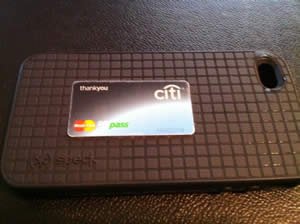
My funny story: I went to the Duane Reade directly across from Penn Station last month. DR was a Google wallet launch retailer in NYC, with all of the beautiful marketing logos. I waved my phone to check out..  and the store manager was there behind the 8 cashiers.. he said “is that Google Wallet”.. I said no it was a Citi Sticker glued to the back of my iPhone.. I asked him how many purchases he has seen from people using their phones.. Answer “none in the last 2 months”… Across from Penn Station… wow..

Carriers as dumb pipes?

25 April 2012

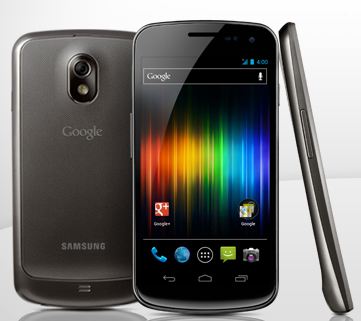
I just bought a brand new Galaxy Nexus on Google’s new play store today (https://play.google.com/store), very excited to have an unlocked GSM phone that I can take with me around the world. Better yet, I can now take advantage of Google wallet and many new NFC based applications..  independent of any carrier (… although the Sprint people are A+).
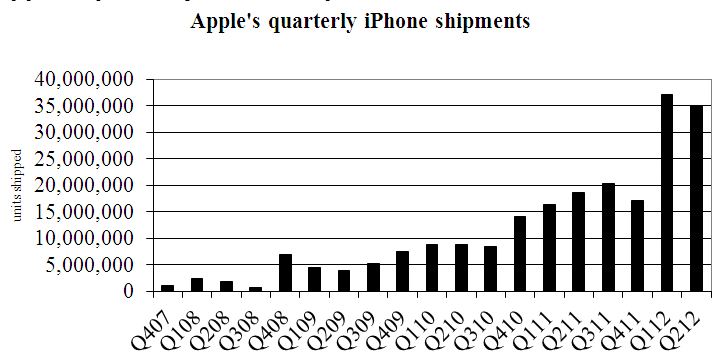
Given Apple’s tremendous earnings yesterday: 80% growth in iPhone shipments (30M), 150% year-over-year growth in iPad shipments with margins improving to 47%…. what does the future hold for carriers? If consumers go to the Apple store to select THE product will The Network be an afterthought? Its not just the MNOs who are on the short end of the stick, Retailers also loose when manufactures like Apple create an effective BRAND, PRODUCT and EXPERIENCE (see related USA Today article and Forbes).
How are the carriers responding? What are they doing to deliver new value or help the industries impacted by this new dynamic? They have gotten together to create an environment where they completely control everything: NFC (in the US it is a consortium called ISIS).  I was one of the first to break news of this consortium back in 2009, with some strong recommendations on their strategy (see Ecosystem or Desert).  If you were a retailer, or small company with limited resources, where would you place your bets? With Apple..? or a consortium of mobile operators that have been working for 3 yrs trying to get a pilot working across 12 different suppliers.

This week, I was struck by how similar the carriers “walled garden” NFC strategy is to previous attempts to create a “Walled Garden” . Why are the MNOs recycling the same control strategy? Remember Einstein said “the definition of insanity is doing the same thing over and over again, but expecting different results”.  As background, VZ (and most MNOs) love the “walled garden” strategy.

Version 1(2004-Present). BREW platform from Qualcomm (dumb phones).

Version 2 Handset capabilities

  1. Verizon invested over $300M in GPS “platform”, an investment they planned to recover by charging for Apps that wanted to use GPS. RIM was the first to realize that it could not deliver consumer features at odds with what VZ would authorize.
  2. Firethorn was the first payment related application that VZ promoted. Objective was to limit all consumers to Firethorn as the only approved “signed application” where consumers could check their bank balance. Banks were each asked for $1M to allow for their customers to check their balances on this MNO controlled application.. yeah.. great idea (2007)
  3. Search. $600M exclusive deal w/ MSFT in 2009. Unfortunately for MSFT, Android was not included agreement and then VZ make “Droid” THE key marketing theme.
  4. I could go on.. but

Version 3 NFC

  1. Control SE (http://tomnoyes.wordpress.com/2011/02/03/isis-platform-ecosystem-or-desert/)
  2. ISIS. Consensus is that the carriers will keep plugging along at this for 10 years..  however without talent, retailers and handsets I don’t see how they can sustain investment.
  3. Create a new BREW.. handset platform that leverages NFC and secure customer data.. payment (ISIS) is just one of the applications. Note that most carriers are in midst of issuing RFPs for SE management (my vote is for Sequent here). The objective of this effort is to create a “secure platform” where applications can leverage customer data (for a fee).

Would you want to “play” in a walled garden? The owner gets to make the rules and take the rug out from under your feet (ie MSFT $600M). Where the star (ie Apple) is able to negotiate special treatment or go over the top without you ever being aware? No way.. you can’t run a business like this. I wouldn’t even want to play..

Carriers must think about value creation before they can think about control. Apple earns its margin from brand and experience… they are not forcing people into their store. For example, the Samsung Galaxy Nexus is an unbelievable phone… easily on par with the iPhone.. But the carriers won’t let it in the market unless Google give them the keys to the SE.  It’s just crazy…My 11 yr old son can guess what happens next.. Google starts selling the phone directly (which I bought today). As most readers know, the US handset market is a very strange place (handset subsidies and post paid plans). The rest of the world buys their handsets and selects the carriers based upon cost/coverage. What if Google and Apple were to subsidize handsets through marketing, as opposed to anticipated spend? If telephone calls and data were routed through wi-fi whenever available? What do carriers have left?

Every point of “friction” which carriers create.. FURTHER ERODES their future profitability as this friction improves the profitability and market opportunities for companies going above, around and under them. Carrier business culture and experience all surrounds the walled garden “control” approach. This control approach works well for Apple as it has developed an integrated value proposition.. It does not work for the carriers that offer connectivity. To expand beyond connectivity carriers must create new services.. the must become orchestrators of value.. not controllers of handsets. In other words they need to shift from a “permission/transaction/payment” paradigm to  one of discovery->need->->fulfillment. (see my previous blog).Attention US Mobile operators… today your trajectory is headed toward dumb pipes.  You cannot deliver value through control.. no one trusts you.. and you can’t sustain investments to compete against Google, Apple, Facebook, …

What should you do? Where is the revenue opportunity? It is in value orchestration. You have direct consumer relationships… leverage them for marketing, authentication, personalization, awareness. The good news is that Hardware will peak and reach a “good enough” stage. If hardware is a commodity, then brands will begin to deteriorate.. and value orchestration will shift further from the handset node into the Cloud. If any operator agrees with this.. then ask why on earth are you locking all of this customer data inside a phone (NFC) where it cannot be used or sync’d with the cloud.

I will get off my soap box now.

BTW.. AT&T I fully appreciate that you can disable my new Nexus.. please dont make me go to an MNVO.. just another point of friction.

Digital Wallet Strategies

Warning.. I ramble a bit in this one.

23 March 2012
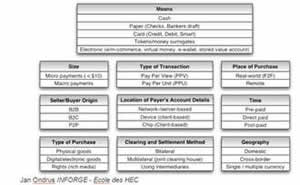
Description: Mobile Market BreakdownDoes anyone remember Microsoft Wallet circa 1997 (See Wikipedia)? Digital wallets are certainly not a new phenomena. Today we are struck with eWallet saturation: Google Wallet, ISIS Wallet, Visa Wallet, iTunes accounts, Amazon Accounts, Square, PayPal, …  How many places must store all of my credentials?

For my own benefit I thought I would take a brief look at the history to determine what the future may look like (As the future holds the key for my investment decisions). With respect to Wallets, what are they? What are successes and why? What is the consumer value proposition? What are the risks? What does the future hold?

My last blogs on this topic were in November 2009, Investors Guide to Mobile Money, and in 2011 – Tough Start for Mobile Payments.

What is a Digital Wallet?

My all time favorite YouTube video definition is below (Courtesy of Google)

http://www.youtube.com/watch?v=gKGptWtzeaU

[youtube=http://www.youtube.com/watch?v=gKGptWtzeaU]

Proposed Definition: A consumer owned and controlled account that can store any electronic form of what is normally held in a physical wallet, including: payment, ID, coupons, loyalty, access cards, business cards, receipts, keys, passwords, shopping lists, …etc.

This definition sounds broad enough..

As a consumer, what would you think of having multiple physical wallets? I personally don’t have that many people I trust. Trust is a very important element to a consumer. Some of the information in my wallet is sensitive, and there is also a financial risk associated with loss of payment information (particularly outside of the US).  What kind of entity would want to assume the risk of holding all of this information?  Which reminds me of a story,

I was in a Board Meeting with a senior partner of a “Top 3” VC discussing consolidated sign on. A start up was proposing to hold all of the login credentials for all of your bank accounts. As the former internet head for both Wachovia and Citi I had some firm views on the topic and asked “who is going to take the risk if credentials are compromised”? I further explained “it is not a technology problem, but a risk problem.. Bank’s will not let someone keep their Customer’s keys if they can’t insure the risk”. As a side note, I also instituted a policy that if a customer discloses their credentials to anyone, they are responsible for any losses that result (sorry Yodlee).

Within a Digital Wallet, securing information AND giving Consumers the exclusive ability to control what is shared with whom is a challenge (beyond technology and trust). We thus have many limited “Wallets” that are constructed around specific purposes, for example Microsoft’s wallet has evolved to LiveID.  From a pure technology perspective, the mobile phone (with NFC) seems to present an opportunity to provide the Consumer with a device that can uniquely handle the security and authorization aspects of a holistic digital wallet. In my view, the challenges faced by the “phone as wallet” are business related. Per my definition above, a wallet should allow consumers to control what goes in and how it is used. Today we see the carriers (ex ISIS) create a platform based upon their control, allowing only cards that have paid a fee to enter into their wallet. I digress…

What makes for a successful wallet?

Customer Trust, Customer Control, Convenience, Ubiquity (opposite of lock in), Intuitiveness, Experience in Use (buying, redeeming, accessing, ..), Security,

If I have a wallet that only accepts 3 cards that are not accepted at any of the top 20 retailers (ie ISIS), it is of little value. Why not let consumers control what goes in? This is where carriers must get to in order for NFC to survive. Even then, NFC phones are far from my recommendation. After all if your payment information is locked in a mobile phone how do you use it when you are at your computer buying something on Amazon? Locking information in a phone is just plain stupid in the age of the cloud.. most agree that individuals should have a their information in a cloud they control. The NFC zealots reading this blog will respond that it NFC doesn’t require a network and is more reliable… my response, the POS and payment terminals are connected.. NFC doesn’t need to hold the card in the SE.. it just needs some sort of identifier.. or in the Square cardcase example no NFC at all just your voice print. After all if there is no auth from the payment network.. the transaction will not happen.. so something is connected in 99%+ of card transactions.

Consumer Value Proposition

Description: C:UserstomDocumentsPersonalblogIPP_3_clusters_labels.jpgMy primary digital wallet is Amazon, with Paypal as a close #2. The buying experiences are just superb, unfortunately neither extend well into the POS. I have a PayPal debit card I use here.. but I have a hard time justifying why I would use a paypal debit card that pulls money from a pre-funded account which is tied to my Bank of America Checking.. why not just use my BAC Debit Card? I don’t think I’m alone here.. The thought that comes to mind: why do I use PayPal at all? Convenience is certainly a key element, but I also really don’t like giving out all of my personal information to every vendor I do business with.  Why does any vendor need to know my name? Is there a business case for anonymity? For Readers in Germany I know your answer… of course there is.

Most Silicon Valley eWallet business cases are being built around data sharing and “closing the loop”. In a network analysis model, every step away from the optimal consumer experience (control, anonymity, ubiquity,..) impacts broad based adoption.  Alternatively, new value propositions (ex incentives, rewards, loyalty, …) can reverse entropy, but only within specific groups/clusters (that realize the value). Thus a highly fragmented world of wallets, each built around specific functions limited to narrow networks, where customers exercise only limited control and hence participate in a limited fashion.

Risks

My last blog on Payment Risk was associated with Square (I still don’t like the swipe, but I have eaten my shoe now that they have surpassed $4B GDV and have developed CardCase… which I love). Microsoft had grand visions for Wallet and Passport, and pulled back for a number of reasons. Globally, most consumers still have problems putting all of their information in one place. The Fed, OCC, FTC, CPFB, Banks have all been circling around the broad proliferation of consumer data.. what are the risks of having your payment instrument stored with 100s of vendors? While at the The Clearing House’s annual event, I was pinged by a JPM Chase exec.. what will be done to secure payment information?  At the policy level, many believe there is a national security risk in the compromise of our payment systems…  It is something all of the Banks are thinking about.

While cloud based storage of information sounds fantastic… there remains a gap in integrated controls, security and authentication. This is where I see both the US and EU taking action on consumer data access and controls much beyond what is now within PCI. Given today’s technology, there is little reason for any merchant to hold your actual credit card number.. yet it is still the case.

What business incentive is there for any entity to hold “unlimited” sensitive consumer information? If the information cannot be accessed without user consent? All of these factors will shape wallet functionality to either something focused within a given domain, or under complete control of the Consumer.

Wallet Strategies

1) Consumer Friendly.. Single store for all consumer information. Payment, loyalty, reciepts, … The players I see here are Google, Square. (note I acknowledge everyone at PayPal just rolled their eyes and point them to my Disclaimer above). Business case is around customer data access.

2) Marketplace focused. Obvious players here: Starbucks, Rakutan, Amazon, Apple, Paypal, Target Red Card. Objective: Deliver a fantastic customer experience in purchasing within a focused marketplace.

3) Form Factor/Device Focused. Mobile Operators, Card Networks, . Deliver technology and incent buyers/retailers to participate. This is not working out so well, exception is Edy.. may work in markets with dominant carrier.

4) Bank Consortium. We see this more in Europe at the moment, but I believe the US regulatory bodies are pushing banks to work together here.  Much more payment focused, and thus minimal consumer value… Banks/Fed must realize mobile is not about a new form factor, but a new value network.

5) Retail/Transit Consortium.  Transit is already clear leader here in Asia…. Transit actually resembles more of #2.  Where there is only one transit company provider I believe it is.. this Category is defined as one wallet working across multiple retailers.. I look at this as incentives tied to something like a decoupled debit.

6) Commercial. Example outbound payments, payroll distribution, global dividend payments – hyperWALLET.

7) Other???

Future of Wallets

“Limited Wallets” can obviously be very successful: Starbucks, PayPal, Amazon, Apple iTunes, Oyster, Edy, Suica, Octopus, hyperWallet…. But all started around an existing marketplace/system. In order for an independent wallet to thrive it must deliver value within a core network. My approach to evaluating retail payments evolves around a central hypothesis: payments support a commercial system, they are only the last phase of a long marketing, incentive, shopping, selection, and buying process.

Networks are resilient to change, this is both an asset and a hindrance. The value that is delivered within an existing payment network is tied to the commercial system in which it operates. This includes both business agreements AND technology, neither of which are easy to change. As the nature of retail changes (example payments, and incentives across virtual and physical channels) new “value exchange” networks will form. Existing payment networks will certainly attempt to change, but given their distributed ownership, nodal control over rules, and legacy infrastructure it will be “a challenge”.

In the US today, this is what is happening with Google Wallet, Bank initiatives to form “the next Visa” and Large US retailer’s plans to form a new payment network that they control. Today’s wallet initiatives are operating in a very dynamic landscape: retail is changing, technology is changing, new value networks are forming, new marketing platforms are emerging.. The margin is always better in orchestrating the interaction, than in coordinating the transaction. Thus I place my “wallet” bets in the short term with groups that can control the commercial marketplace (ie Apple, Amazon, eBay, Retailers, … ), and with groups that can orchestrate new value propositions (ie. Google, Square, hyperWallet, ..etc).

Have a great weekend… My Asia thoughts are next.

WSJ Article – A Retailer Wallet?

3 March

Today’s WSJ Article – Retailers Join Payment Chase

What do Retailers want in mobile? Well they certainly DO NOT want a wallet which they can’t control and is restricted to a containing credit cards, at a cost of 350 bps cost (sorry ISIS). One retailer told it to me this way

“Mobile Operators know how to run dumb pipes, not create business platforms for marketing… their current wallet initiatives are akin to a toll bridge, NFC is their toll booth where they stop me before reaching my customer..  to cross their NFC bridge I have to wait in line and when I arrive at the gate they don’t want $0.50 they want 3.5% of what I’m carrying in my truck, and a copy of the shipping manifest (the customers names I’m going to see in my delivery). This model doesn’t work for me. “

Retail is under assault. Globally retailers have had their gross margins compress from 4.2% in 2006 to 2.4% in 2011. They view mobile as a principle tool that has led to this margin compression. When I go into talk to the majors and say ‘lets talk about mobile’ .. their response is usually something like “yes.. how do we stop it.. can we put disruptors in our store”? Of course there is much shock value here… particularly for Silicon Valley types where everything mobile is good. Read my previous post for more perspective here.

Few people know that ISIS is charging Bank issuers for the privilege of having their cards in the wallet. The only way issuers can make the up front investment is to have a product that pays for itself quickly. That product is a credit card. This means that the ISIS wallet is 100% credit..  for a retailer that has a transaction mix of 30% cash, 40% debit and 30% credit this means adding a payment type that is a 100% mix of its most expensive type. Retailers ask: will this ISIS wallet drive increased spend? Why on earth would I want to do this? For Consumers this means you have to pay with cards that are “privileged” and not the card you want to pay with.  A major advantage for Google is that it lets Consumer decide what is in its wallet. In the Google model, Issuers face no cost in getting their card in the wallet,  Stores can add their own private label or loyalty card.. and anyone can market..  Consumers are in control. Google Wallet is not just about payment.. but about advertising, loyalty and incentives. This point is missed in the mainstream press.

The WSJ article is off on a few points.. Retailers are not focused on the mobile payment side at all (..well perhaps agreeing not to allow bad ideas to get started is agreeing on a wallet strategy.. but in a negative sense).

What are Retailers looking for?

  • Mobile as a tool for enriching the customer marketing, shopping and purchasing experience.
  • Ability to deliver above to ALL Consumers.. not just ones with the latest phones
  • Retailer friendly protection of sensitive consumer information
  • Lowest cost payment (Google is the only entity that allows customer and retailer to store ANY card.. example paypal does not support store private label)
  • Integration with loyalty and marketing programs

A consortium of highly competitive Retailers face that same challenges that a consortium of highly competitive Mobile Operators do.. Neither will work unless they can deliver value.  Individual companies do not excel in designing business platforms that benefit others, and are therefore very myopic.  Consumer’s are very reluctant to use a retailer’s own app while they shop or checkout… For example if I was shopping in Target,  why would I use Target’s iPhone app for price comparison? will I get the same results as Amazon’s?

What should you expect from Retailers?

  • A defensive play.  Retailers are well positioned to slow adoption of technologies that don’t make sense for them. There is a high degree of collaboration among retailers here .. most of it resulting from their success in pushing back on interchange in various markets (recently Durbin in the US).
  • Something that makes financial sense for them.. FAST. Given their margins.. they have no flexibility in making investments that don’t have a solid plan. Just as the MNOs look to card interchange.. Retailers also look to 3rd parties like CPGs (think trade spend and coupons) to fund consumer facing initiatives.
  • Cost reduction is usually more of a focus than sales creation.. this is particularly true when competitors get together in a consortium. I’m not going to say much more here.. but I think you get my point. For example, if I enabled ACH payment on my loyalty card.. I would take interchange from $0.21 debit down to $0.04…  Target has done this with their Red Card.. a FANTASTIC product. http://tomnoyes.wordpress.com/2010/12/06/redcard/
  • Customer control. Retailers want to own the consumer shopping process… or at least feel like they own it.  Quite frankly Google has built the platform to enable this, but Retailers are concerned about data.

There is a tenuous balance to make mobile work in retail. This balance is between: Consumer, Retailer, Bank, Manufacturers, Mobile Operators, Advertisers, ..  “Platform effectiveness” or “Consoritum effectiveness” has a strong correlation to: data, reach (distribution), relevancy, effectiveness and control. Just as MNOs are not balanced, neither are Retailers.. Consumers will migrate to where value is delivered. In Retail, selling a commodity good at a higher price is not a winning business model.. I consider myself fortunate to work with many of these groups, what is most ironic is that each group views a consumer as 100% owned by them.  My position is that NO ONE owns the consumer… that consumers are driven by value and will change their behavior when value is delivered.

In my view, a neutral party ( like Google, Apple and MSFT) are much better positioned to bring participants together. Neutral Parties are akin to public highways with optional services.. They are not picking sides.. or forcing you to stop at the toll booth and hand over a percentage of your merchandise to complete a  “commerce” process.

—- Addendum

BTW I admit that I’m a fan of Google. It is my baseline because nothing else is in the US market (POS Payment with phone).. and Retailers love them. It is the only company I know of that has Retailers calling them to request a visit.. why? Google delivers sales.

Great example of collaboration is Google Local Product Search (http://www.google.com/intl/en_us/products/local.html).  Stores can choose to share store level product inventory. Think of how sensitive this data is.. what you are selling in which store (0r just a binary in/out of stock). Retailers love this function and enthusiastically share this data with Google because it improves the way consumers choose a physical retailer from an online search. It drives sales. Payment is only the last transaction in a long research, marketing, shopping, selection process.

Your feedback appreciated.