Software Secure Element – HCE Breaks the MNO NFC Lock
52

16 Sept 2012
Quote of the week
It’s not clear that NFC is the solution to any current problem…
Apple Senior VP Marketing – Phil Schiller
A few months ago I was in Hong Kong speaking with institutional investors at CLSA’s annual event. One of my more memorable meetings was with James, a chief investment officer with a top 5 investment bank. The heart of the discussion was on the future of telecom. Although I’m not a telecom expert, James was interested in finding “the next killer app” in mobile. Was NFC it?
His investment thesis was that phones are starting to become commodities: screens, LTE connectivity, cameras, battery life, applications, …etc are all reaching a point of good enough. His time with me was spent drilling down into payments and NFC in order to see if I had any new data which would alter his view. I did not….
What will happen in a world where handset hardware is no longer the basis for competition? The same thing which occurs to any manufacturing area where a “good” becomes a “commodity”: margins compress for the commodity and migrate to the new area which is basis for differentiation/competition. Yesterday I outlined the implications, and investment opportunities, for the mobile operators.
This week we saw the launch of the iPhone 5.. better, brighter, bigger, lighter, clearer, faster, lasts longer, crisper, sturdier, takes better pictures, more tightly integrated to applications that Apple controls, …etc. A great new product. An Evolution… not a revolution. What Apple understands better than almost any consumer product company is: consumer experience matters. While some handsets already exceed those of Apple’s iPhone in feature/function (Samsung’s Galaxy S III)… none can match it on consumer experience. Experience is where Apple is focusing its efforts, and the major shift in iPhone capabilities is NOT in hardware features.. but on orchestrating value in ways it can control.
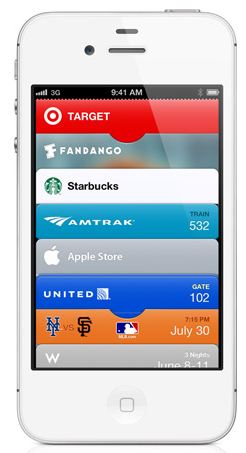
Apple takes a Clayton Christensen approach to the iPhone: what problems does a customer have, and how do I solve them? For example, I hate typing in my name and address on a little mobile browser to order a good from lets say Gap.com. Apple’s passbook will resolve this by allowing Gap to integrate to passbook to pull all of the “iTune’s account” information over .. so I don’t have to fill this out anymore. Apple is moving to solve real consumer problems… It is looking to orchestrate value delivery.. moving the “hub” of coordination from the phone to iCloud.
This is what I refer to as the Stage 4 Value Shift (see April Blog). Theoretically, an open innovation model (ex Google/Android, Java/Oracle, …) should be able to quickly surpass Apple, as 100s of small companies invest larger amounts (cumulatively) in expanding capabilities of a “platform” (see platform leadership). However, Apple has learned its lessons from its Mac days and has defined competition along the lines of “consumer experience”. In this model, it does NOT CARE about interoperability or standards… rather Apple is maniacally focused on delivering value to consumers with usability, reliability, intuitiveness, … being core measures. Apple’s brilliance is multi-faceted, but by defining product focus along the lines of consumer experience, the iPhone’s closed model of innovation can not only effectively compete, but win easily against open systems. In other words, while open systems compete more effectively in a feature/function war.. they loose in the qualitative measures of “experience”.
Apple will obviously monitor the environment for effective new features, to ensure that the core product hardware remains competitive. For example, the real world transaction data for NFC based payments is a complete joke. There are no phones, there are few terminals, and there is no consumer or merchant value proposition. Sure there are exceptions like Japan, but only closed systems with a monopoly leader have proven the ability to push the solution out.
Apple does see a need to improve device-device communication, as well as shrink the hardware footprint. With these drivers, and given the prototypes in market, I fully expect Apple to redefine phone hardware architecture with a new integrated chipset that would encompass functionality of: controller, radios (wi-fi, BT, 14443, …etc), secure element that would also enable the SIM to be virtualized and placed within the SE. If this is indeed Apple’s direction, it will not be a new basis for hardware competition on feature/function, but rather: battery life, footprint and control (ex. virtualized SIM).
Other players also have unique strategies and assets. For example, Google’s strategy: orchestrate value based on consumer data. In assessing investments I look for one key answer: what problems are platforms trying to solve and in what marketplace?
All about Commerce… and Entertainment
My major issue with Apple’s strategy is the degree to which other entities can participate. I see mobile phone revenue streams in 2 major buckets: Commerce and Entertainment. Entertainment is not a focus for me.. Commerce is. Businesses operating within the retail sector are undergoing fundamental transformation. For 1000s of years, local merchants survived based upon distribution and availability. Today they are left trying to sell a commodity product at a higher price to consumers in a marketplace with near perfect transparency.
What is the roll of any intermediary in commerce? Not just in the selling, and purchasing, but in marketing, product selection, distribution, service, support, … What does the new face of retail look like? This is the focus of Amazon… they are the leader here from a “virtual commerce” (e and m) perspective.
As an investor, I believe we will see a massive new wave of companies redesigning retail. Five years ago I had a camera, an iPod, a PDA, GPS, phone, … today I have one device. What will the bundling (or unbundling) of retail look like? What are the problems to be solved? In the past 15 years mobile has grown up along side of commerce, operating primarily as a replacement to fixed line and then migrating to a replacement for online. We will start to see phones leap into commerce in new ways.. but my firm position is that this leap does not start with payment (the last phase of a commerce) but with marketing (the first phase). Why? Because marketing and retail are fundamentally broken, and Payments is NOT.
It is in this context that I laugh at NFC solutions. My favorite quote on this topic was from head of strategy of top 5 retailer
“Mobile Operators know how to run dumb pipes, not create business platforms for marketing… their current wallet initiatives are akin to a toll bridge, NFC is their toll booth where they stop me before reaching my customer.. to cross their NFC bridge I have to wait in line and when I arrive at the gate they don’t want $0.50 toll.. they want 3.5% of what I’m carrying in my truck, and a copy of the shipping manifest (customers’ names). This model doesn’t work for me. “
Commerce will find another path… one of least resistance … of better “experiences”. This is what Apple is enabling in Passbook, and why Amazon is succeeding in commerce. NFC is just a radio… one who’s standards are largely controlled by banks, mobile operators and card networks. Why would retailers want to participate here at all? We should not act to enrich the complexity of payment networks, or wireless ones, but rather form new networks.
Sorry for the typos.. and re-hash of past blogs.. hope it was useful.
 29 August 2012
Previous Blog – Part 1 – May 11, 2012
Let’s update the Cloud Battle story and discuss events since my last post on the subject
Square, Visa, Google, PayPal, Apple, Banks, … have recognized the absurdity of storing your payment instruments in multiple locations. All of us understand the online implications, Amazon’s One Click makes everything so easy for us when you don’t have to enter your payment and ship to information. (V.me is centered around this online experience). Paypal does the same thing on eBay, Apple on iTunes, Rakutan , …etc. But what few understand is the implication for the physical payment world. This is what I was attempting to highlight with PayPal’s new plastic rolled out last week (see PayPal blog, and Target RedCard). If all of your payment information is stored in the cloud, then all that is needed at the POS is authentication of identity (see blog).
The implications for cloud based payment at the POS are significant because the entity which leads THE DIRECTORY will have a significant consumer advantage, and will therefore also lead the breakdown of existing networks and subsequent growth of new “specialized” entities. For example, I firmly believe new entities will develop that shift “payment” revenue from merchant borne interchange to incentives
Since May, the following “significant” events “in the battle” have occurred:

Where are the cloud battle lines? Well most significantly the battle lines are forming away from NFC (as I stated in January). Even my old friends at Gartner have caught up and placed NFC in the trough of disillusionment. To restate, NFC is not bad technology.. but it delivers no “value” in itself beyond control. Mobile operators have consistently failed to build a business around a “control” strategy (see my Walled Garden Blog). In the ISIS example they mandated use of credit cards only, as this higher credit interchange was the only way to make revenue. Well guess who pays the freight here? Yep the merchants… Wal-Mart and its peers were not thrilled at giving issuers and MNOs 3.5% of sales for the privilege of accepting a mobile payment.
The Cloud battle is complex, as the strategies are about MUCH MORE THAN PAYMENT. Payment is the ubiquitous service that is the last phase of a successful marketing, engagement, shopping, selection, deliver, retention, loyalty process. Leaders from my vantage point:
Payment Networks:
Physical POS: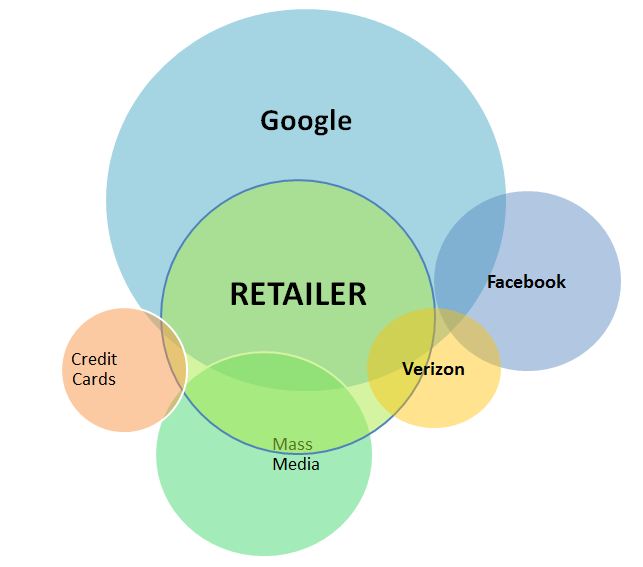
eCommerce/mCommerce:
How many places do you want to store your payment credentials? Who do you trust to keep them? What data do you want providers to know about you?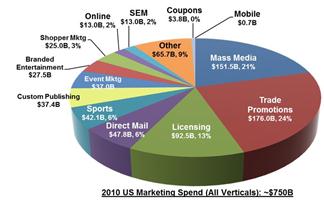
From a macro economic perspective, total payment revenue for all major participants is just under $200B in the US. Total marketing spend in the US is over $750B. Total retail sales in the US is $2.37T (not including oil/gas, Fin services, T&E). Marketing is fundamentally broken… payments is not. Retail sales gross margin has been compressed from 4.2% in 2006 to 2.4% in 2010. Who is best able to execute on the combined retail and marketing pain points? Who can be retailer friendly? Consumer friendly? Marketing friendly?
I start my analysis with #1 the consumer value proposition, and #2 the merchant value proposition. Entities like Google, Paypal, Apple already have tremendous consumer relationships and traction. They thus have very few “acquisition” costs. However, these entities do bear the costs of changing customer behavior. There are many approaches for changing customer behavior:
Other groups like MCX and ISIS bear the cost of both customer “acquisition” AND behavior change for: Consumer, Merchant or Both. As I state previously. one of my favorite arcane books I’ve ever read was “Weak Links” I’m almost reluctant to recommend it because it is so good you may jump ahead of me on some of my investment hypothesis. One my favorite quotes from the book
Scale-free distribution (completely open networks) is not always the optimal solution to the requirement of cost efficiency. .. in small world networks, building and maintaining links between network elements requires energy…. [in a world with limited resources] a transition will occur toward a star network [pg 75] where one of a very few mega hubs will dominate the whole system. The star network resembles dictatorships in social networks.
Networks like V, MA, PayPal, Amex and DFS are working to participate in this new Macro economic opportunity. But established networks are hard to change
“The network forms around a function and other entities are attracted to this network (affinity) because of the function of both the central orchestrator and the other participants. Of course we all know this as the definition of Network Effects. Obviously every network must deliver value to at least 2 participants. Networks resist change because of this value exchange within the current network structure, in proportion to their size and activity.”
The implications for cloud based payment at the POS are significant because the entity which leads THE DIRECTORY will have a significant consumer advantage, and will therefore also lead the breakdown of existing networks and subsequent growth of new “specialized” entities. For example, I firmly believe new entities will develop that shift “payment” revenue from merchant borne interchange to incentives (new digital coupons).
The current chaos will abate when an entity delivers a substantial value proposition that attracts a critical mass of participants. Today most mobile solutions are just replacing a card form factor… this is NOT VALUE. I am currently placing my bets on solutions that merchants support (Square, Google, MCX, LevelUp, …) as this is a key “fault” of almost every other initiative.
Comments Appreciated (as always sorry for the typos…)
Apple and NFC..
Nothing really new here for the NFC crowd. No new information.. Purpose is to paint a picture by which investors can make a call.
Most of the issues associated with NFC today are NOT technical.. but rather business: What value can it bring? Who controls it? Who makes the money? How is it shared? For payments… NFC has been a complete bust (with the exception of Asia). Retailers just aren’t excited about the prospect of paying credit card interchange (3.5%) for the privilege of accepting a mobile payment which funds a 12 party supply chain (necessary to make NFC work).
The WSJ (July 6, 2012) and I both have consistent information that Apple will NOT be rolling out NFC in the iPhone 5. If true, I believe Apple’s exec team is taking a brilliant approach to be a late follower here. Let everyone else pay the freight to educate the customer, and establish a high level retailer POS value proposition (with associated retail infrastructure). Apple is much better positioned to extend the App Store experience into mCommerce.. and control the customer end-end experience. Apple will also likely expand “selectively” into physical commerce areas like ticketing.
To be clear, I’m not positioning that Apple has run away from NFC.. but there has been no success to date and there is no reason for Apple to run into this space. In order to monetize and sort of physical POS solution, Apple must have a business structure that can orchestrate a very complex “physical commerce” value proposition. Keep in mind Apple doesn’t have much of a sales force to cover advertisers AND retailers globally. Rather than “focus” on the POS, or implementing standard NFC chipsets, I see Apple doing something “unique”… What is it?
I was meeting with senior NFC execs this week, and the consensus view is that Apple will likely redefine phone hardware architecture. Most of you have read about Apple’s recent patent application which would allow the SIM to be logically placed within the SE. Also there are rumors about expanding the capabilities of the Radio and Controller to also cover Bluetooth functionality. The “value” that an integrated hardware solution? Not that much different than what NFC alone is capable of.. but it would greatly reduce footprint, power, time, and perhaps even expand “throughput” (example Accelerating/bypassing BT pairing: NFC is 424kb/s while Bluetooth V2.1 is 2.1 Mbit/s).
Although far from being an expert in this area, my summary view is that Apple recognizes the need for a secure radio and data store in the device that it can control. A metaphore for an ID. How do they want to control this ID? Well they certainly need to secure the wallet access (AuthenTec $356M last week, plus rumored IRIS scanning).
This approach is opposed to that of the carriers all of which are working very hard to “standardize” on an NFC architecture (Single Wire Protocol – SWP) that they will control. Apple’s plans are firmly in the opposite direction, and a brilliant business move. Giving carriers the control over this utility would be akin to letting them run an app store that they control.
Apple may be running much faster than anyone in the industry knows toward this vision. Perhaps they have already indigenously created this new combined secure element/UICC/BT Radio. Although I see no need for them to run with this early… But if they did create this capability in the iPhone 5 they will certainly have the control to govern how it is used.
What does this means for investors? Perhaps you start by asking Vivotech’s .. as they just folded up shop after 12 years. A fantastic team with a rock solid product line.. their fault? Betting NFC would take off sooner. Given Apple’s unique ability to capture mobile ecosystem profits it is always tough to find areas to nibble. On the software side, how can new companies help Apple orchestrate value propositions in the physical world? Retail? Ticketing? Healthcare?.. The times.. they are a changin…
I’ve covered this topic quite a few times
As most of us have known Apple has been out of the NFC game for some time (18mo+). It’s just amazing that the mainstream press can be so caught up in a disinformation hype cycle that seemed to have been started by some kind of patent application. Yesterday’s WSJ had a fantastic article on Apple’s plans.
What makes for a “successful” consumer wallet? From previous post:
Customer Trust, Customer Control, Convenience, Ubiquity (opposite of lock in), Intuitiveness, Experience in Use (buying, redeeming, accessing, ..), Security,
If I have a wallet that only accepts 3 cards that are not accepted at any of the top 20 retailers (ie ISIS), it is of little value. Why not let consumers control what goes in? This is where carriers must get to in order for NFC to survive. Even then, NFC phones are far from my recommendation. After all if your payment information is locked in a mobile phone how do you use it when you are at your computer buying something on Amazon? Locking information in a phone is just plain stupid in the age of the cloud.. most agree that individuals should have a their information in a cloud they control. The NFC zealots reading this blog will respond that it NFC doesn’t require a network and is more reliable… my response, the POS and payment terminals are connected.. NFC doesn’t need to hold the card in the SE.. it just needs some sort of identifier.. or in the Square cardcase example no NFC at all just your voice print. After all if there is no auth from the payment network.. the transaction will not happen.. so something is connected in 99%+ of card transactions.
I’m very impressed that Apple’s exec team has kept the iPhone away from NFC… strategy brilliance is an understatement. By expanding Apple’s ownership of Digital Goods (old blog here with financials) into mCommerce (ie physical goods bought via phone) and narrowly aligned Physical commerce (ex. Ticketing) they can maintain ownership of the entire consumer process.. from marketing, sales, purchase and “delivery”.
Apple’s unique ability to garner 75% of mobile handset profits is shifting from DESIGN to VALUE ORCHECTRATION (see blog). No one can orchestrate value in NFC (see 12 party mess). What is truly ironic is that as the carriers spend hundreds of millions of dollars on NFC and their walled garden strategy to “force control”, Apple and Google will be further ahead in coordinating value in new networks. This value delivery outside of the mobile network will further cement carriers roles as dumb pipes (related blog). This seems to support my hypothesis (often stated) that it is nearly impossible for legacy networks to adapt in delivering new value propositions.
7 May 2012
Thinking about consumer choice today. As the MNOs think about how to lock up the SE and SE Management.. when does a consumer get to choose what is on their phone?
As most of you are aware, ISIS is charging each and every issuer for the “right” to put their cards on the phone. In a tweet 2 weeks ago I mentioned that all of the phones in market have a major problem: they can only support one card emulation application at a time. Although I’m not completely sure if this is a firmware issue or “silicone/memory” issue it relates to the storage on the NXP’s chip. Apparently the latest version’s of NXP’s chips don’t conform to Amendment C of Global Platform’s 2.2 Specification (supporting multiple card emulation apps).
http://www.globalplatform.org/mediapressview.asp?id=777
What this means is that your new NFC phone could have hundreds of Visa cards loaded.. or hundreds of MasterCards.. but the phone can’t support the signed java applets (card emulation apps) from Visa (paywave), Mastercard (paypass), Discover (zip), Amex (expressPay), Transit (…).. you get the picture.
Doesn’t everyone want a wallet where all of your cards can get stored? Visa, MA, Amex, .. plus loyalty, gift, … ?
My hope is that the market (and regulators) will push to keep consumer choice at the center of mobile phone wallets. If the carriers can’t lock down the SE, consumers will be able to choose the most effective option. Retailers know that the only cards willing to “PAY” to get in the ISIS wallet are credit cards.. which obviously impact their interest in accepting a 350bp payment product.
The mobile wallet that “wins” will be the one that offers consumers the most control. Letting consumers load any card they want.. without that card issuer first having to pay some sort of toll to the mobile operator. Also letting the consumer decide who gets access to what data. This last area is something that needs improvement beyond data that is stored in the SE. Right now apps are taking the approach of “take it or leave it” agreeements:.. we get your location, e-mail, contacts, usage, … This terrible approach is leading to an unbelievable dissemination of data that is completely out of control. This is why HTML 5 will win.. Apps are becoming the paradigm by which companies obtain almost unlimited customer information.. and consumers will wake up soon.
As a side note, isn’t it amazing that this topic hasn’t been covered more broadly? Of course it speaks to the true uptake of mobile payments (at POS) in general..
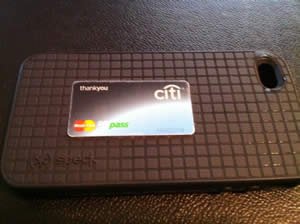
My funny story: I went to the Duane Reade directly across from Penn Station last month. DR was a Google wallet launch retailer in NYC, with all of the beautiful marketing logos. I waved my phone to check out.. and the store manager was there behind the 8 cashiers.. he said “is that Google Wallet”.. I said no it was a Citi Sticker glued to the back of my iPhone.. I asked him how many purchases he has seen from people using their phones.. Answer “none in the last 2 months”… Across from Penn Station… wow..