Google Ads in the Agentic Era: Merchant Center Becomes the Center

Great article in Search Engine Journal surrounding the shift in Google Ads: the product feed is no longer just a catalog. It’s becoming THE primary bidding signal.

This shift matters for payments strategists because it reveals how Google is positioning itself as the orchestration layer for agentic commerce. The advertising infrastructure and the commerce infrastructure are converging, and Merchant Center is the “last mile” integration point to merchant data from store level product inventory, to pricing, to SKU level purchase feeds (for measurement).

Continue reading

Federated Models Need Measurement

A follow on blog to my Intent data post yesterday. Where intent is needed for authorization, measurement is needed by every “specialist” participating in an agentic interaction. As background I was founder/CEO of Commerce Signals, focused on measurement and card transaction data. Measurement is a powerful business. In fact, I would say Google started out as a measurement company with the PageRank algorithm. By keeping track of what users clicked on which link for which search word, they created the directory of the internet. Let’s dig a little deeper into why measurement is key in agentic, and for all federated models.

Google is not building a monolithic “central brain” to disintermediate the ecosystem. Instead, as discussed in my UCP Blog (also see Ask Macy’s Case Study), they are fostering a world of specialist collaborative models that interact across three specific technical layers:

Continue reading

Role of Identity and Trust in eCom

Please excuse typos.. Editing not complete. I had a great compliment this week: “Tom you write so dense.. why are you so different”? I’m not an analyst or a blogger, but a guy that has run operational businesses and led venture investments. The only great thing I’ve ever done in life is to meet great people with passion and ability to execute on a vision. This blog is how I chat with all my colleagues. Glad others find it useful..

This is a rather long blog.. if you don’t have time read the wrap up at the end which is a summary of key points.

—————–

Continuing on from yesterday’s blog on Authentify – Bank ID Service, I thought I would outline the role of identity in eCommerce and the problems to be solved. Although most of you know me as a payments guy, I also have deep roots in data working directly with retailers, AdTech, Google/FB and media (in addition to issuers/acquirers/networks). In looking through eCommerce articles I couldn’t find one relating to identity (from a big picture perspective).. So I thought I would write one.

You need to be logged in to view the rest of the content. Please . Not a Member? Join Us

Payments Data and Google Attribution

Great articles yesterday

This year, the iab (interactive advertising bureau) labeled 2017 as the Year of Measurement. Understanding why, and what is changing here is key for retail, banking and advertising. Most of us know the adage “measure what you want to manage”. As an engineer, I view measurement as the key feedback loop in any system or process. In order to gain feedback (close the loop), you must know what happened.

You need to be logged in to view the rest of the content. Please . Not a Member? Join Us

The Directory Battle PART 1 – Battle of the Cloud

11 May 2012

This week we had both Finnovate and CTIA going on, and behind the scenes the battle lines are being formed in a forthcoming “BATTLE OF THE CLOUD” wallet. I didn’t include wallet in the quote because Battle of the Cloud sounds so much more ominous. Perhaps I should take a page from George Lucas’ playbook and start with Chapter 4.

I’ve been talking about the directory battle for some time now (see Clearxchange post).  Who keeps the directory of consumer information? As I outlined in Digital Wallet Strategies: “ securing information AND giving Consumers the exclusive ability to control what is shared with whom is a challenge (beyond technology and trust). We thus have many limited “Wallets” that are constructed around specific purposes”.

This week we had Visa’s President tell the CTIA audience that Visa has moved beyond NFC to V.me (see my previous post on Visa Wallet). What is really going on? What is the battle of the cloud?

Square, Visa, Google, PayPal, Apple, Banks, … have recognized the absurdity of storing your payment instruments in multiple locations. All of us understand the online implications, Amazon’s One Click makes everything so easy for us when you don’t have to enter your payment and ship to information. (V.me is centered around this online experience). Paypal does the same thing on eBay, Apple on iTunes, Rakutan , …etc.   But what few understand is the implication for the physical payment world. This is what I was attempting to highlight with PayPal’s new plastic rolled out last week (see PayPal blog, and Target RedCard). If all of your payment information is stored in the cloud, then all that is needed at the POS is authentication of identity (see blog). Remember US  online commerce is $170B/yr, physical commerce is $2.37T (not including FS, Travel/Entertainment).

The implications for cloud based payment at the POS are significant because the entity which leads THE DIRECTORY will have a significant consumer advantage, and will therefore also lead the breakdown of existing networks and subsequent growth of new “specialized” entities. For example, I firmly believe new entities will develop that shift “payment” revenue from merchant borne interchange to incentives (new digital coupons).  Another example is Paypal’s ability to selectively assume settlement risk on some transactions as they route through low cost ACH, or even allow customers to use BillMeLater to selectively convert certain purchase to loans AFTER THE FACT.  In these 2 examples, traditional payments revenue will be significantly disrupted by: lower cost transactions, competitive credit terms (each purchase), and incentives tied to payment type.

But do consumers really want to store all of their information in one place? With one entity given the ability to see all of your spend? For an mCommerce transaction, there is nothing I hate more than having to type in my name, address and card number in that tiny little screen.  Most of these mCommerce solutions (like V.me) are little more than an “autofill” where the merchant checkout page leverages API integration to the cloud service to retrieve user information (see diagram here). If I’m on my phone, my carrier already knows who I am, so seems fairly logical for them to help me with the autofill. This is a reason I’m now a big fan of Payfone. I could also see why it makes sense for Apple and Google. But why Visa? Does it make any sense at all for Visa to hold my Amex card?  Oh.. let me cast a few more stones on ISIS/NFC.. that payment instrument that locked in your phone.. yeah it can’t be used for the online purchase. Perhaps someday someone will write a secure NFC mobile browser plug in to extract data from the SE.. but that opens up a whole new can of worms.

Today’s online merchants are getting a very small taste of the war as they are asked to integrate auto-fill plug ins (Paypal, V.me/CYBS, Payfone, Google, soon to be Apple). Merchants should get on board with all of them, as they do represent a tremendous improvement in customer experience, and you may be able to squeeze some free marketing/implementation money from each of them. However, the cloud battle at the physical POS is still a few years off, as existing card products have a substantial advantage in risk modeling/fraud. This is where Square is taking a lead, as it has the best consumer experience hands down. Low volume merchants really should assess whether they need a specialized POS system, as the parameters for selecting one have shifted from ISO/Processor/Cost/Acct Recon/Book Keeping to Sales, incentives and customer experience.

Battle starts in mCommerce/eCommerce

My guess on timing of V.me is driven by knowledge of Apple’s impending plans to “extend” its iTunes account to payment outside of the Apple ecosystem. Visa sees this network risk and is in an all out war to protect its network, by leveraging its CYBS asset online. The banks have worked on a directory concept for quite some time. The Clearing House (TCH) built a working system called UPICK to solve the problem of consumers giving their RTN/ACCT# out in the open.. assigning a virtual number to the account. A sort of “virtual account number” that could only be translated by TCH.  It never took off, because ACH fraud was low and banks were much more excited about having merchants accept cards as payment.

Retailers are not silent participants to this war.. their champions are Target, Tesco, Amazon, and Rakutan. I hope Amazon will finally dust the plans off of One Click expansion. Other retailers are also aligning to assess creation of shared cloud infrastructure.  Sorry I can’t comment more. Similarly MNOs are also in the cloud game, for example Payfone may be one of the best services in the market..

Who are the players in the Cloud [Payments] War?

The initial battle will be in mobile/online purchases.

  • Banks: V.me, Mastercard,
  • Platforms: Apple, Google, PayPal
  • Retailers: Amazon, Rakutan,
  • MNOs: Payfone, Boku, payforit, billtomobile, …

Most confusing is that there are few alliances.. it is many against many.

http://tomnoyes.wordpress.com/2011/10/26/apples-commerce-future-square/

2012: Remaking of Commerce and Retail

8 January 2012

I’m recovering from a nice Holiday.. successfully marrying of my only daughter.. keeping a smile on my wife’s face (most important) as well on those of my children. I never thought all of that family time could make me look forward to work..  Many of my bank friends seem to be making new year’s resolutions to do something different and I’m fortunate to have them share their opportunities. What are the really big opportunities?

For those that read my blog.. I’ve been very locked-in to the concept of value proposition, and the challenges of creating a new “network” for exchange of value… with my often repeated “every successful network begins with exchange of value between at least 2 parties”. In addition to sharing ideas on new opportunities with former colleagues, I’m also about to take a trip to the Far East to meet with institutional investors.  In Asia, I’m preparing for discussions which will be focused on: What are the REALLY BIG opportunities out there?  Where are the sustainable bets? Where are the risks? My bias in this new year is Commerce.. and the influence that mobile will have in reshaping it.

My Investment Hypothesis:

Unlocking the “commerce” capabilities of mobile will reshape the $2 Trillion advertising market and $14 Trillion retail landscape, as new customer shopping experiences are created which leverage consumer data.  2012 will be a key year where retailers, mobile operators, handset ecosystems, banks and consumers make choices which will affect outcomes in future years.

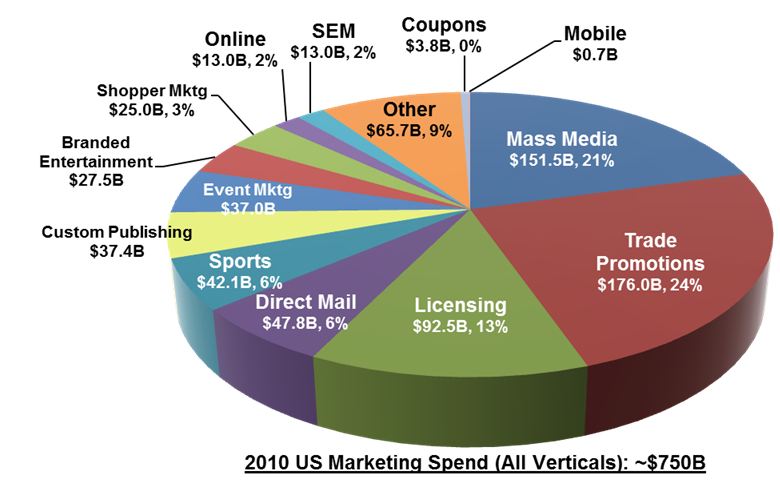
In the US alone, we spend over $750M in marketing. Any guess how much of that is “targeted” to a specific consumer? Less than 10%.. !!

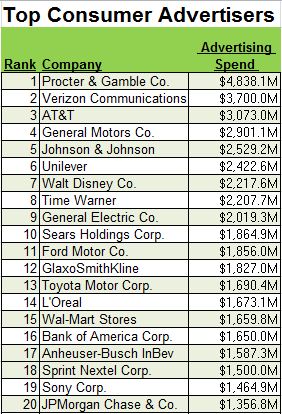
It’s not that top advertisers don’t WANT to target, but that they have no Platform to do so in the Physical World. In the virtual eCommerce world, there are many facilities for engaging influencing, incenting and paying (for performance). Data is shared from the first click… to the point of purchase across many intermediaries. In the physical world, life is much different. For those interested in this space, let me strongly recommend reading the Booz Shopper Marketing paper (just fantastic).

$14T of retail represents over 22% of the $61T global GDP.. How often do we get to talk about rewiring 25% of the global economy? This is why I’m so high on Google right now. Google currently gets only $14B of the US $750B in marketing spend, and is making strong inroads to the physical POS.  (please see my legal disclosure above).

As I’ve stated before, Retailers are frequently assumed to be a bunch of back water idiots.. as a former banker I admit my mistakes…  this simplified view of retail could not be further from the truth..  Retailers are on the cutting edge of competition. Competition drives data based decisions, customer centricity, daily focus on margins (as they are razor thin) and a toughness matched only in professional sports.

Retailers had to be tough and innovative… after all how do you sell a commodity on more than just price? This week’s WSJ story on Best Buy perfectly illustrates the challenges ahead for many retailers.

“I will buy it in your store…use it while I order another one for 75% less on Amazon and then return the new in the box one at your store,”

The mobile handset is uniquely capable of serving as a bridge between the virtual and physical world.. giving individual consumers access to unlimited information while they shop, not JUST price transparency, but information on quality, fashion, community reviews, availability, AND the opportunity for merchants and manufactures to reach the customer in the buying process BEFORE AND DURING their shopping experience.

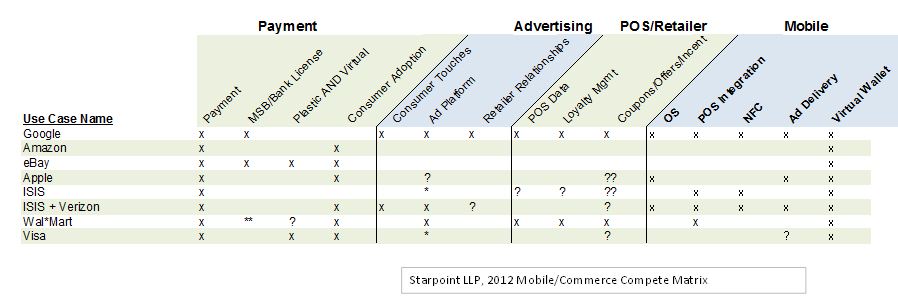
What companies have the platform today? Amazon, Apple, Google, eBay, Visa.. all have elements, but the value propositions of each are widely disparate. If Commerce is to be remade, there must be a new value proposition to manufacturer, retailer and consumer. Notice I left out banks..  The problem with virtually every platform on the list below is that they have started life as bank friendly.. which destroys their merchant value proposition. Groups like ISIS are focusing on payments.. and not on a larger mobile value proposition (focusing on advertising for example, also see ISIS: ecosystem or desert).

How will commerce (and retail) be remade? I have no idea… but this will be the year which we see platforms start to gain momentum. You can guess what I’m telling my bank friends…..

Card Linked Offers

28 November 2011

pdf version here (sorry for previous Typos.. I need an editor.. so pardon the mess)

I’m fat and happy from all the Turkey.. and was thinking of what to blog about.  I’ve decided to link a funny story… with a complex market. Earlier this month I was called by a recruiter to lead a new company. Here is the abbreviated dialog

  • What is it? “a bank Groupon”..
  • How is it structured? A separate company? A Bank Division? “Both, it is a separate company 100% owned by bank”
  • Are they looking to spin it out? Will there be other investors? “no”
  • So CEO (with no equity upside) building a business from Scratch within a complex bank? “yes”
  • Where will it be based? “right here in NYC next to the Bank”
  • Did you know the COO of Groupon was given about $xxM in options… how are you going to compete with that? “we are not looking to compete on compensation.. but we do want to compete with Groupon”
  • Good luck with that!  (See my previous blog for lessons learned on bank spin offs)

Message here is that top banks and payment networks are getting into the “offers” space. I haven’t seen an industry analysis of CARD LINKED OFFERS…. So I thought I would create one. Today I was reading 2 month old post in All Things Digital: Will the next Groupon Killer be your Bank.. ? One of my first Blog posts (2.5 yrs ago) covered this subject as I saw in back in 2008/09 “Googlization of Financial Services”.  Here are a list of current leaders in Card Linked offers

Not all of the companies above are the same. Here are a few basic strategies behind these start ups

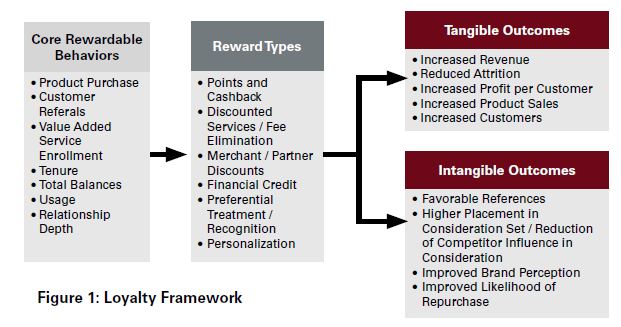
Strategy #1 – Improve Existing Loyalty Effectiveness. Colloquy.com is the industry leader in research on loyalty programs. Two recently published white papers by Colloquy.com display a macroeconomic view of the size and value of loyalty programs for U.S. consumers. Colloquy estimates the total value of loyalty currency issued to U.S. consumers in 2010 is a $48 billion dollar industry across financial, travel and hospitality, and retail sectors of U.S.

economy in 2 billion U.S. household loyalty program memberships. Edgar Dunn provide a great graphical view on the purpose of loyalty programs
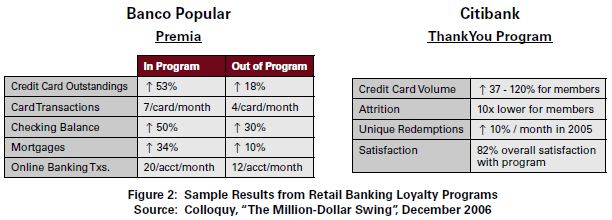
Why do banks want to improve Loyalty?

A) Credit cards carry a much improved interchange (250-350bps vs $0.21 flat of Debit)

B) Loyalty Programs are highly effective card use AND retention tool. From Edgar Dunn

Strategy #2 – Redemption Network. Improve the way redemption works. Enable redemption of specific items. Catera and Cardlytics are leaders here. Great Article on Clovr (now Linkable Networks).

Banks used to see card offers as part of a large revenue stream.  Now banks need to find unique technologies in order to capture the customers’ attention again.  Some of that technology comes from mergers such as Cartera and Vesidia to form a new more innovative merchant network platform.  Other pieces of the card-linked offer space is coming from companies that are focused on card-linked offers, such as Boston-based Clovr Media.

… The card-linked offer company wants to make sure that promotions they are powering are meaningful.  They do that by getting down to the SKU level (the long number on products that identifies a unique product within a store. Tom said, “we can go right down into a particular product within a store, get right down into the SKU level.  Instead of 10 dollars off at Staples, it’s 10 dollars off a cannon printer at Staples.  We see that as a very powerful concept.

CONCEPT is the key word here as “networks” are minimal beyond eCommerce store fronts capable of redeeming offers for specific products. In the physical world, none of the participants above have cracked the code on the scenario above. POS integration is too hard AND retailers will not give up their data.  Entities like Catera are using other parties (ex SavingStar in Grocery) to give item level credit hours, days or weeks  after the sale.

Strategy #3 –  Advertising.  The first 2 strategies above are about leveraging the $48B in loyalty “value” to incent merchant participation. A third strategy is geared to attract retailer participation in an advertising network. The primary value proposition: target card customers with specific offers.  This strategy usually driven by card NETWORKS and Issuers looking to expand “value delivery” on existing networks (the  googlization article above provides an example). Although Banks certainly have the data to make this work, this is NOT a merchant friendly platform. Can you imagine using your Amex card at Macy’s then getting an incentive at Neimen Marcus? This is one reason why retailers are loathe to share any item detail information.. it would only help banks/networks more accurately target their customers.

Apparel, QSR, Furniture and a few other niches could be served in this model (few other retail categories have significant ad budget), but the price is credit card interchange.

Summary

Retailers will respond to Banks’ loyalty spend initiatives ($48B), but “redemption” will largely be online (restricted merchandise lists) because retailers do not share data at the point of sale.  Banks and the Networks are attempting to expand Card Linked Offers into the advertising space, but this means someone will have to sell retailers and construct campaigns.  Given that neither Banks nor Networks are adept at selling retailers anything, there will be a need for 3rd party ad exchange (ex freemonee) where advertisers can bid to place across multiple issuers (ie each issuer controls their respective cards).  These Ad Exchanges will be slow to mature because there is no proven CPA for card linked offers (and associated merchant sales lift/profitability). In other words the Merchant cost of accepting a credit card, paying for an offer, and tracking profitability is not a home run today. We need only to look at Visa Offers to see the confusing and bleak future. Consumers are overloaded with e-mail and messages.. behavior will not change until there is compelling value. Value cannot be delivered until there is a critical mass of ads which can be targeted. Targeting can not be done effectively because issuers only have merchant level preferences (not item level/brand). … Only certain categories of retailers have substantial marketing budgets… the majority of marketing is spent by manufactures.  Manufactures don’t know their customers.. (hence is why Shopper Marketing is red hot). … and so on

A logical extension of card linked offers is card linked pre-paid offers. This goes back to “Bank Groupon” listed above. Banks want to run a pre-paid program for retailers.. a “pay before” you eat… at a discount. Keeping it on the card so consumers don’t loose the offer and redemption is a seamless process within the existing card settlement flow. Hey this is a great idea for consumers and merchants. Problem is business model for banks. If this pre-paid was sold by a regulated bank entity I doubt if they would be able to take advantage of the breakage which drives Groupon’s profitability. Banks will also be responsible for things like escheatment..  this is where state regulators come looking for unclaimed funds.

Your thoughts and feedback are appreciated.

A related blog on Visa’s activities is listed below.

http://tomnoyes.wordpress.com/2011/05/20/visas-mobile-strategy-portfolio-manager/

Square’s $1B Valuation.. its not a payments business any more

Square $1B Valuation…  ?

29 June 2011

Today’s WSJ Story

What shocked me most about Square today? Kleiner’s lead in the round. I know the KPCB team well, and they are the best VC I’ve ever worked with. Given my negativity… a re-evaluation is in order. Both to protect my reputation with my KPCB friends.. and for my own sanity.

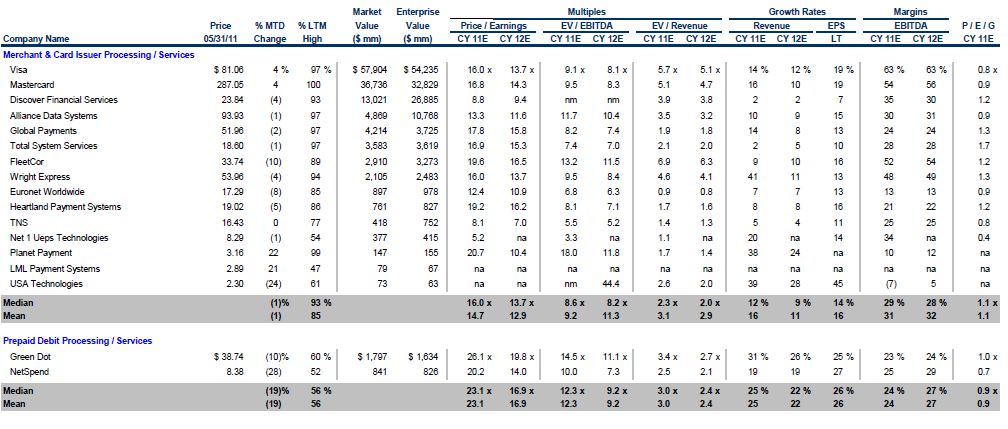
There is no way that Square can justify a $1B valuation as a payment company. At $1 billion in annual processing volume, Square would be roughly the 70th largest merchant acquirer/ISO in the country. Global, the largest pure play, processes $135 billion annually, has other businesses, and has a $4 billion market cap. See data below from my friends at FT Partners (a great Advisory team in payments).

3 years ago, Jack pitched KPCB on the idea of Square as the PayPal of Craig’s list… KPCB passed. The business model has changed substantially, and is now on V3+.

Why did KP invest in this last round? I haven’t spoken to them, but my guess is that it is no longer about payments.. but about changing the checkout process at the POS.

Here is my guess on Square’s V3 Business Model

1) Create a path to exit the transaction business.. they don’t want to manage sub prime acquiring risk.

2) Create a software/platform business for mainstream retail. Work with major retailers to use Square register as the way retail (and retail sales agents) interact with consumers. In other words re-engineer the buying experience at the POS. KP always looks for “big bets”.. this would certainly be one of them.  In this Version 3 business model, Square will interact/integrate to legacy POS systems. They will also attempt to own the mid market and replace current POS vendors in the mid tier. At the low end they may still be working deploying the Square we see today, but it will be challenged by PCI Rules. For a more detailed look at current plans (they evolve rapidly) see this excellent post:http://mashable.com/2011/05/23/square-card-case/

3) Create an advertising/incentive business. We hear them working on this today, but their current customers are dry cleaners and hot dog stands.. obviously they need to move upstream. Advertising and incentive will be the primary basis for their new revenue model.

Perhaps this is why Square is working their employees 20 hours a day.. they know that the big guys are also all over this.  IBM, Cisco, Nokia, NCR, Micros, Oracle, SAP, MSFT … I doubt if they will just sit back and let Square throw out a new POS system. What competency does Square have in Campaign management and advertising? Who owns their current data? This last point is very relevant.

Consumer transaction data collected by Square today is property of merchant. Although hot dog vendors may not care… Large retailers know how sensitive it is..  Square’s future model depends on both the consumer and the merchant giving up consumer data at the line item level in the POS. I see apparel and large department stores as possible candidates.. perhaps even electronics.. but the challenges are tremendous.

Can all of this work? It depends on the retailers.. having Visa on board may actually be a drag on their merchant adoption. One thing is for certain.. their valuation is certainly not based on their success as a payments business.