
Part 1 – US Payments Environment

Assessing the Environment and Setting the Focus  (part 2  – Power of Bank Networks)

© Starpoint LLP, 2022. No part of this site, blog.starpointllp.com, may be reproduced in whole or in part in any manner without the permission of the copyright owner. Please do not share unless you hold an enterprise license.

Must read FT article “How JPMC’s plan to kill credit cards split the bank”. The article discusses Jamie Dimon’s internal mandate to drive a new payment network. I was shocked with the level of internal org quotes here.  In my view, Jamie is the best bank CEOs in history (based on performance and talent coming out of JPMC). As a former banker, I know how hard it is to move the ship.  However, FT is wrong. Chase’s efforts ARE NOT about killing credit cards, but rather creating something much bigger.

This is a long blog..

Continue reading
TCH Phase 1 – eCom Wallet

Short blog – 80% confidence

© Starpoint LLP, 2022. No part of this site, blog.starpointllp.com, may be reproduced in whole or in part in any manner without the permission of the copyright owner.

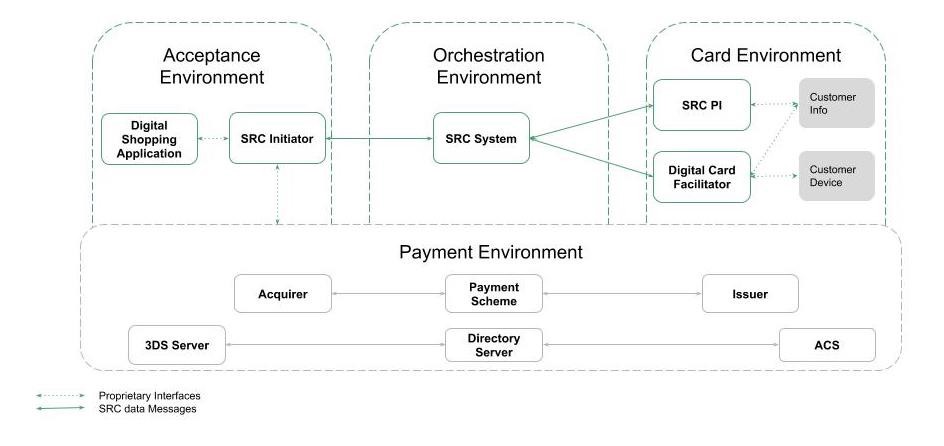
Phase 1 of TCH’s token efforts will be in SRC model. A bank branded “wallet” acting in the DCF role for TCH PIs . Just as VAC has enabled the elimination of physical hardware for acceptance, issuers see a plastic-less future for cards. They want to own the issuance of cards and want much more than a token, they want the entire “wallet”.

Go to market is either as:

  1. TCH as SRC System, or
  2. Visa as the SRC System for all TCH banks (V and MA) with TCH is a “unique role” managing all consumer data, registration, payment tokenization, …
Continue reading

Durbin 2 – Short Update

Note: existing subscribers have all notifications turned off by default. To update notifications, please visit Member Login –> Notification Preference above.

© Starpoint LLP, 2022. No part of this site, blog.starpointllp.com, may be reproduced in whole or in part in any manner without the permission of the copyright owner.

What are the new Durbin’s legislative prospects? A: Not at all likely (<10% probability)

Top retailers spent this week meeting with Bank CEOs trying to convince them to support the new Durbin legislation. Their pitch was to enable bi-lateral deals, “new products” and avoid network rules (see blog). Banks did not seem to bite, as they remembered the lessons of Durbin 1:

  • Only largest merchants benefited from dual routing
  • Consumers lost in debit rewards (ie keep the change), increased bank account fees, and no merchant pass-through of savings
  • Acquirers/processors did not pass through fee reductions to most merchants
  • Networks recovered lost revenue through merchant fees
  • Large banks lost competitive advantage as smaller “exempt” banks under $10B operated under different rules
  • See WSJ article

You need to be logged in to view the rest of the content. Please . Not a Member? Join Us

TCH Tokens in eCom SRC Model

Part 1 – Current US Routing Rules

© Starpoint LLP, 2022. No part of this site, blog.starpointllp.com, may be reproduced in whole or in part in any manner without the permission of the copyright owner.

UPDATE – Nov 29 2022 – Note that I have conflated the relationship between SRC and 3DS 2.0. 3DS 2.0 is the authentication protocol used by SRC. 3DS 2.0 has been widely adopted as a mandatory replacement to 3DS 1.0. Part of the driver for adoption was the EU SCA mandate. SRC has NOT been widely adopted as it is a fairly broken consumer experience at the moment. 

You need to be logged in to view the rest of the content. Please . Not a Member? Join Us

Durbin 2 – Impact on “Wrapping” Rules?

© Starpoint LLP, 2022. No part of this site, blog.starpointllp.com, may be reproduced in whole or in part in any manner without the permission of the copyright owner.

A highly technical “what if” scenario involving a long-sought after change by top US card issuers. I’m fortunate to have the exec teams of just about every payment network, processor and FinTech read this blog. I have 3 main drivers for writing today:

  1. Start a community discussion
  2. Assess the potential for a much more strategic driver behind the proposed Durbin bill
  3. Most “change” in US payments is driven by 7-10 players: networks, top issuers, Google, Apple, … etc. These changes have an enormous impact on the FinTechs building around them. I’m hoping to help these small companies plan around these changes as the only advantage of a start is speed.

Note I DO NOT think this scenario is likely, but rather possible (30% probability). Historical context is key and the only reason I’m spending time on this today is that 27 bank CEOs have been discussing this for over 10 yrs.

You need to be logged in to view the rest of the content. Please . Not a Member? Join Us

Finicity, Plaid, Tokens and Network of Networks

Summary

  • Primary driver of finicity/Plaid deals is not open banking, but in support of the “network of networks” strategy.
  • The owner of the consumer directory, will rule payments. Tokens are the central battle field for trust networks (and payment network) consolidation as well as new services. 
  • MA lost out on the Plaid purchase, but is likely to end up far better off for it. 
  • The Visa/Plaid deal is likely to fall through as the retain consumer credentials for 5yr (claimed by class action).
  • V/MA will likely own the payment token directory 
    • Visa is leading – 1B tokens issued by Visa (acquisition of BellID/Rambus)
    • Mastercard Track  successfully leads the market in global B2B Least Cost Routing
  • V/MA have substantial hurdles in expanding the directory beyond payments
    • Few direct consumer or merchant relationships
    • Bank and Apple/Google leadership in Customer Identity/Trust
    • Trust is the core of bank risk management (and Bank margin)
    • Network effects decrease transaction costs for established services and increase value (acceptance). However they have the reverse effect on new services.
    • Value/Margin is migrating to the ends of the network and many new networks are forming. 
    • The energy to manage participation in multiple networks is dropping (with Mobile). Enabling specialized networks that cater more finely to precise needs of each node. 
    • V/MA will see substantial growth in core payment volume with continued network effects and the breakdown of Payment silos.

You need to be logged in to view the rest of the content. Please . Not a Member? Join Us