ApplePay’s 11th birthday in iOS 26 – What’s New?

ApplePay turns 11 yrs old this month, a wallet that has gone from 0 to 84 countries and 11,000 banks. Hard to believe, my blog was the first to break the news of ApplePay in iPhone 6 back in 2014.  Back then I was on the advisory board of Money2020, and asked M2020 co-founder Johnathan Weiner to hold a place in the agenda for Apple Pay. September rolled around and we still had an “empty” slot, I told him to trust me. It worked out well, as Apple finally rolled it out on September 9th 2014.  There was so much innovation in the initial wallet from tokenization, provisioning, credentials in the secure enclave, … and of course the game of chicken Apple played with Issuers on their 15bs (in US, 7bps in EU see story). 

I just installed iOS 26 this morning, so what’s new in iOS 26 w/ ApplePay

Continue reading

The Wero Wallet: A Solution in Search of a Problem?

I’m a reluctant payment historian. Over my 30 yrs I’ve seen many payment projects come and go. The latest is the European Payment Initiative’s (EPI) new wallet, Wero. Billed as Europe’s homegrown answer to Visa and Mastercard, it carries the significant political weight of figures like ECB President Christine Lagarde, who frames it as a “march to independence”. While the political ambition is clear, I believe the business case is fundamentally flawed.

Continue reading

Pricing Agentic: Economic Models for a New Kind of Demand

$4B market opportunity (18 mo), who will lead it?

Today’s blog covers possible pricing models and market structures for agentic transactions, a new type of demand (purchase order with a payment instrument). Retailers may despise the idea of a new aggregator, but they can’t say “no” to a PO by their customer. US retailers spend over $400B on marketing ($90B of which is digital marketing). There is no CAC for an agentic transaction.. While the daily innovations of AI and Agentic is fascinating, it is the economics and structures for pricing value that will influence participation, value creation and market success.

Continue reading

Could Stripe Drive eCom Stablecoin Adoption? (A: Maybe, but they wouldn’t do it)

Following up on yesterday’s discussion about the potential for US Banks to issue stablecoins, the fintech world is abuzz after Stripe’s Sessions announcements covering AI and stablecoin. Given Stripe’s massive influence,  any move they make warrants attention. The question on many payment strategy executives’ minds: Is Stripe about to unleash stablecoins to circumvent traditional card rails for consumer payments? While the crypto-evangelists might be shouting “yes!”, a more pragmatic and skeptical view suggests this is highly unlikely, at least for the core retail checkout experience.

Continue reading

Big News – Google I/O 2025 – Payments View

Google I/O is going on today and tomorrow and they just announced a vast array of new products and services (Google CEO’s blog). Today’s blog is a quick drill down on payments and specifically what “Buy for me with GPay” means for the payment ecosystem (and agentic commerce).

As discussed in Commercial Models for AI Agents, the network and economics surrounding agentic commerce is far from settled. The lack of a clear commercial model and a robust trust framework has impeded Agentic’s growth as commerce is a multi-sided network. Google’s strategy appears to directly address these deficiencies by deeply integrating GPay as a core component of its agentic offerings. This integration aims to provide the necessary layers of trust, security, and transactional capability that have been missing. It also may provide an additional pricing mechanism for agentic transactions.

As outlined in today’s Stratechery the “lack of payments” were part of the original sin of the internet. A “sin” that Google is fixing in Agentic by creating a complex network that unites search, ML, agent-based action, payments, advertising network, billions of devices, consumer-controlled data for personalization, which will redefine eCommerce (and recapture product search). The price of entry? Merchants need to add the GPay button.

To be clear, merchants will still endeavor to use AI in order to create a better customer experience for those customers that enter their domain. But for consumers, the Google offering will be hard to beat as Google leverages their data and preferences across every device to enable customer interaction through purchase.  While Amazon will likely maintain a solid position, most consumers will not start search within a merchant domain. Agentic originated transactions present a new type of demand, fully qualified consumers with a valid payment instrument and transaction request. A transaction type that should operate in a 100% conversion model (ie no abandonment). With GPay, Google provides the consumer authentication and risk data for merchants to decision the transaction.

Continue reading

Stablecoins: Near-Term Predictions

12 Page Blog

Key Themes

  • Stablecoin growth is booming in the areas of remittance, cross-border, disbursement, and B2B supply chain. 
  • Card volumes face no threat as they remain the “last mile” of use and an economic model for stable coin issuers. 
  • The STABLE and GENIUS acts are driving significant central bank discussions, with divergent views on response in Europe. 
  • Asia is developing differently, with the effectiveness of Ukraine sanctions and fear of dollarization driving central banks to a CBDC approach.
  • The value of any network corresponds to the combined investment made by all parties around it. Stablecoin is the fastest-growing network and at the core of most FinTech investments.
  • PayPal, and legacy remittance providers are under a substantial near term threat
  • Expect big tech and mobile platforms to support stablecoins in new ways (ex recurring payments and emerging markets). 
  • A small number of low profit Banking segments are also at risk, as Stablecoin issuers become banks and threaten niche payment providers like Cash App, as well as specialists in categories like MSB, NBFCs, ELMI, …etc.

You need to be logged in to view the rest of the content. Please . Not a Member? Join Us

Scenario – Agentic Wallets and Federated Data

Keeping up with the latest in agentic commerce, artificial intelligence (AI), payments, and data privacy is an ongoing challenge. Data and LLM are the key ingredients fueling the rapid advancements in AI and machine learning innovations. As a privacy advocate, I remain deeply concerned about the centralization of data. Once AI models are built to understand “you,” they no longer need continuous access to your data—just ongoing observation (see blogs on Data Centralization and Payments and the Observer Effect).

Do I think wallets will become “Agents”? No, but they will be the most important interface to all Agents, as they broker identity, authentication, authorization, permissions and highly secure data in the handset. My view is that Wallets enable many agents. This view of the the world is called the Agentic Mesh where specialized agents work together to achieve a result.

You need to be logged in to view the rest of the content. Please . Not a Member? Join Us

Winning in Network of Networks: Collaboration

My largest holdings are card networks, and I’m very keen on their continued growth and sustainability of competitive advantage. My confidence is based on five broad themes. 

You need to be logged in to view the rest of the content. Please . Not a Member? Join Us

Tokens and Binding 101

Let’s talk about tokens. When discussing tokens and payments, it’s important to clarify which category of tokens you’re talking about. Today, I’m not discussing NFTs; instead, I’m discussing card network tokens. It’s hard to believe I’ve been writing on this subject for almost 15 years. For a historical refresh, here are a few of my old blogs

Continue reading

Digital Wallets – Core Functions and Competitive Strategies

What are the core functions of a digital wallet and what will the future bring now that Apple has opened up their Secure Element (see blog)?

I’ve been writing about wallets for over 12 yrs. Let me recap some history

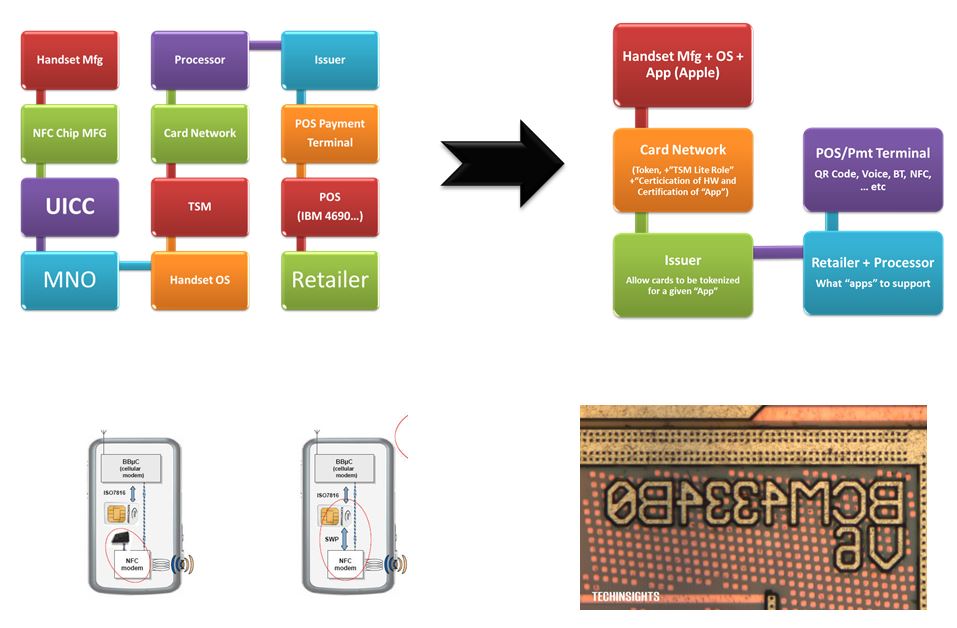
  1. In 2006, mobile operators had control of what “apps” could operate on a phone. In the US Qualcom bought Firethorne in an effort to create a single bank application, where banks had to pay $1 for every balance request. I’m not joking.. Open app stores destroyed this model quickly, but so the MNOs pivoted to the SE and SIM card. 
  2. In 2010, Mobile Network Operators (MNOs) had control of the encryption keys for secure elements. Their pitch to Google was, “Give us a billion dollars, and we’ll give you the keys”. The absurdity here was only surpassed by Doug Bergeron (CEO of Verifone) marching into Google the next year and asking for a “Billion dollars” for Verifone to support contactless (I was just outside the meeting room).  Of course there was no economic model for Google to make a single penny off of payments back then. Even worse, there were 12 parties in the NFC ecosystem, all looking for economics, yet there wasn’t a dime to share between all of them (blog). Now wrap all this silliness into a MNO consortium with the name ISIS.. yep.. What a great brand!
  3. From 2008-2014 the GSMA had a global vision for managing the phone’s secure storage (see blog) and monetizing it for the MNOs. MNOs could control either the secure storage within the SIM card with Single Wire Protocol (SWP) or within the secure element.
  4. ApplePay’s 2014 launch did several things that changed the game. 1) Ripped away control of the SE from MNOs and OEMs, 2) integrated payments and security into the OS (Card in SE, biometrics in Secure Enclave), 3) required a card to activate a new phone, 4) Created economics with the networks for payment (see blog).
  5. From 2007-2014, US Issuers wanted to only enable credit cards for contactless (a premium experience). 27 Issuers (led by Citi’s Paul Galant) were working on their own wallet, to “own” mobile payments (see Civil War). In 2014 launch of ApplePay, Apple forced the Issuers to enable debit at parity to Credit, and also gave Issuers a take it or leave it revenue share (15bps in US, 7bps in EU and ROW). Charlie Sharff (then CEO of Visa) also established a fundamental network rule in “no wrapping”. You can’t wrap a Visa card with another number and let it operate. A rule that was ahead of its time and also more formerly established with Durbin regulations.
  6. The 27 bank project thus floundered for 16 yrs until last year when saw  the light of day in PAZE. Paze is Gen 5 of this effort, and really a white label version of SRC. A wallet that abandons the POS and focuses on eCom with Visa given the reigns as the lead architect only last year (see eCom Politics and Scenarios)
  7. Today, Issuers classify Apple as “enemy number 1” because of the 15bps fee that the Issuers voluntarily signed up for. Their renewed complaint is that merchant discounts (ie 45 bps and Costco, Walmart and Target) puts them upside down on transaction economics. Apple’s position (anecdotally)  is “you knew what my fee was when you gave the discounts.. You voluntarily signed the agreement.. And now its successful you want a discount”? (see 2022 US Payments Environment)
  8. Visa and Mastercard have become the identity infrastructure for the internet because of the binding of identity to payment. India’s UIDAI and UPI have shown the power of separating identity from payment. Europe is working to build a new digital identity infrastructure (and wallet) in eIDAS. Commerccially, Fast Identity Online (FIDO) is at the heart of new eCommerce experiences that will massively disrupt investments in risk and fraud infrastructure. These services are in Card Networks Payment Passkeys, PayPal’s Fastlane and others. These first generation identity services will be surpassed by 2nd generation identity solutions with hardware bound credentials. Google’s Seccure Payment Authentication (SPA) is the best in class authentication solution globally. (also see Adios 3DS hello FIDO2). 
  9. While the tech changing eCom is amazing, there are only 3 options for organizing it into a successful platform: 1) Government Led, 2) Standards Led, 3) Commercial (payment) Network. Of the 3 only V/MA have established an economic model where participants can invest (see Identity Models and my new blog this week on topic)
  10. Wallets have grown substantially from “payments” to the consumer interaction point for “everything” between the virtual and physical world. Door keys, concert tickets, boarding passes, DLs, loyalty cards, student IDs (see Apple’s list of UC’s it will support). 


Continue reading